Cozze

This branch of Cozze closed for good in July 2022 and was replaced by San Sicario, which also subsequently closed. Masakali is there now. I’ve left this review up for posterity.

I’ve been reading a lot of other restaurant bloggers recently, and it’s made me think. These are proper restaurant reviewers in big cities, and they use impressive words like “bosky” and “friable” – both of which, I’m ashamed to say, I had to look up in a dictionary.

The other thing these reviewers do, which I’ve never done, is write in the present tense e.g. I bite into the burger. It has the deep flavour of well-tended cow and so on. This is a very striking way to write about food and it makes you feel like you’re there, in the moment, experiencing that bite with them.

I, on the other hand, tend to write in the past tense e.g. the burger was a bit bland. Recounting an event which has already happened makes it feel like you’re telling someone a story down the pub, but perhaps it lacks that immediacy. Maybe it puts a gap between the writer and the reader.

So does the traditional structure of a restaurant review. Here is why I’m reviewing this place, my reviews tend to begin, followed by this is what the room is like and here’s what I ordered and what it tasted like followed, as night follows day, by here’s what the service was like, here’s how much it cost and, last but not least, this is my verdict. Add the rating, the address and the website, repeat until dead. Job’s a good’un.

One thing those other restaurant reviewers and I agree on is that the best reviews to write are the rave reviews, followed by the hatchet jobs. The ones everybody dreads are the middling, the mediocre, the it was dull enough eating it, but heavens, now I have to write about it ones.

So, I ought to start by explaining that Cozze, the Italian restaurant on the roundabout at the bottom of the Caversham Road, has been on my to do list for literally years, and that whenever I ask people on Facebook where they’d like me to go next someone always pipes up and suggests it.

I should add that it started in Woodley before adding a second branch in central Reading with a third one just opened in Pangbourne. I should then say something like “well, a successful independent chain is a very unusual thing in Reading so I owed it to myself to see what all the fuss was about so I went there one night with my partner Zoë” and there you go, the scene is set.

But really, and maybe this will build some of the immediacy my reviews might sometimes lack, what I really want to tell you is how exceptionally bored I was by having dinner at Cozze.

Take the spaghetti carbonara I had as my starter. A good carbonara should be golden, the sauce should hug the pasta, it should be resplendent with egg, it should be salty and sinful and fun. The pancetta (although ideally it might even be guanciale) should be almost crispy and add its own whack of salt to proceedings. It shouldn’t be like this.
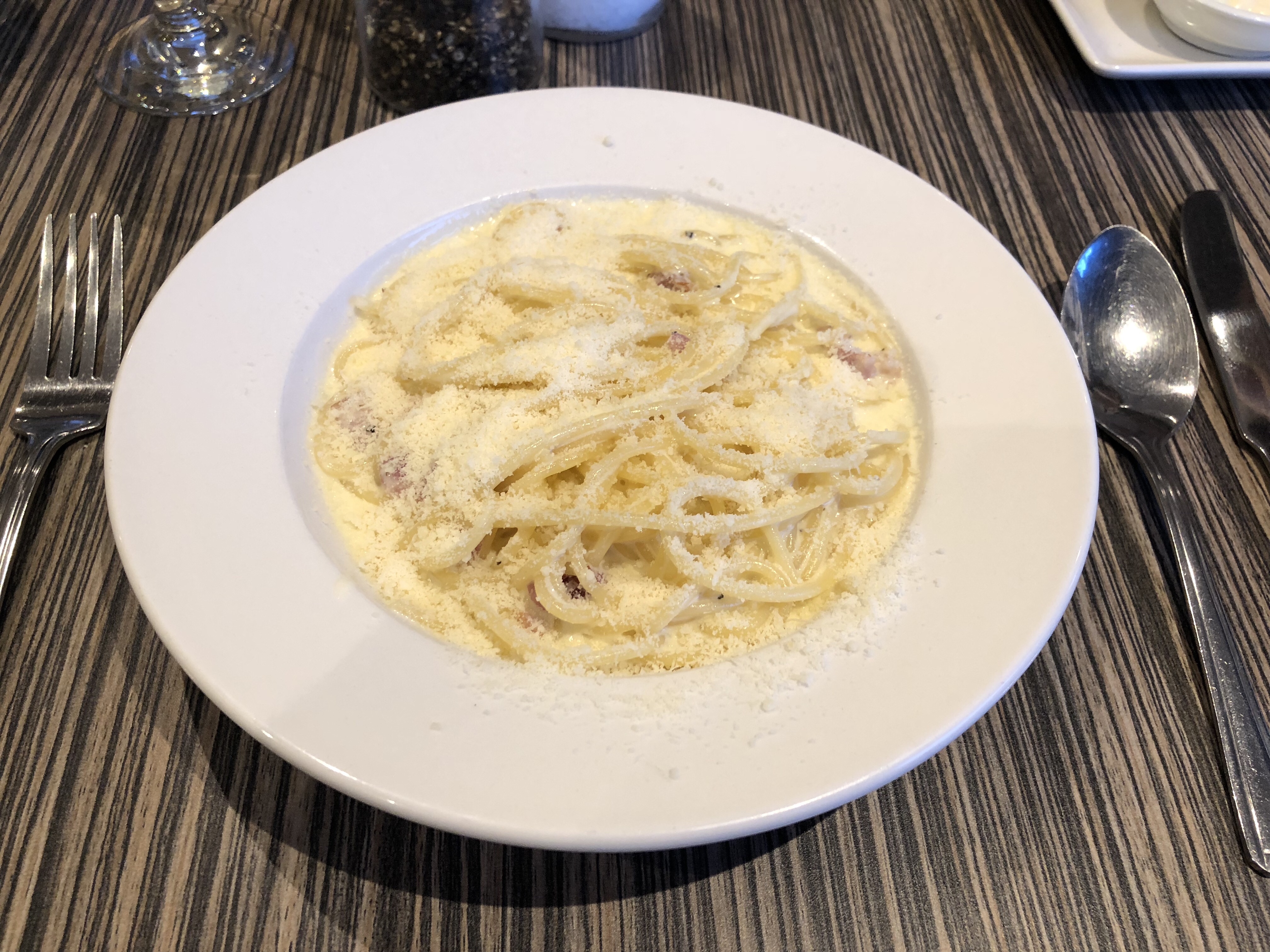
It shouldn’t be a pasty albino of a thing, swimming in cream with scant evidence that it’s ever seen an egg. You shouldn’t be dredging through the lake of liquid once you’ve finished, picking out highlighter-pink cubes of bouncy bacon and wondering why you bothered. It shouldn’t be worse than eating at Carluccio’s, for goodness’ sake. It shouldn’t feel like a dish cooked by people who don’t especially care for food or know how it’s meant to taste.

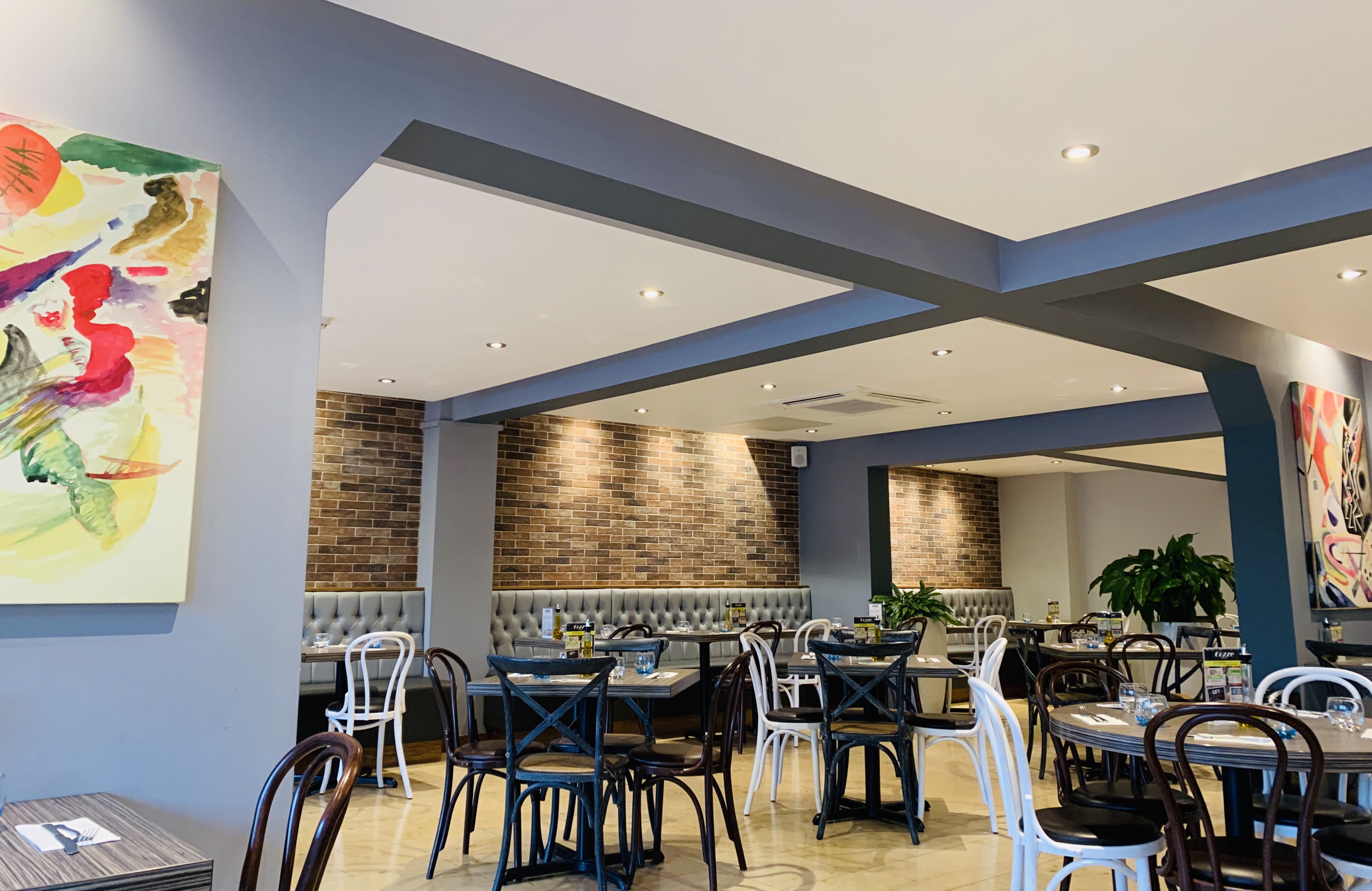
The sad thing is that the room itself is quite nice – a big airy space with nice furniture and vaguely Kandinsky-esque paintings on the wall. And the staff were lovely – really bright and friendly as they brought middling plate after middling plate to our table. We were the only people there when we arrived, although by the end three other tables were occupied. One big group appeared to be regulars, which makes me wonder if they’ve ever considered trying other restaurants. They might like them.
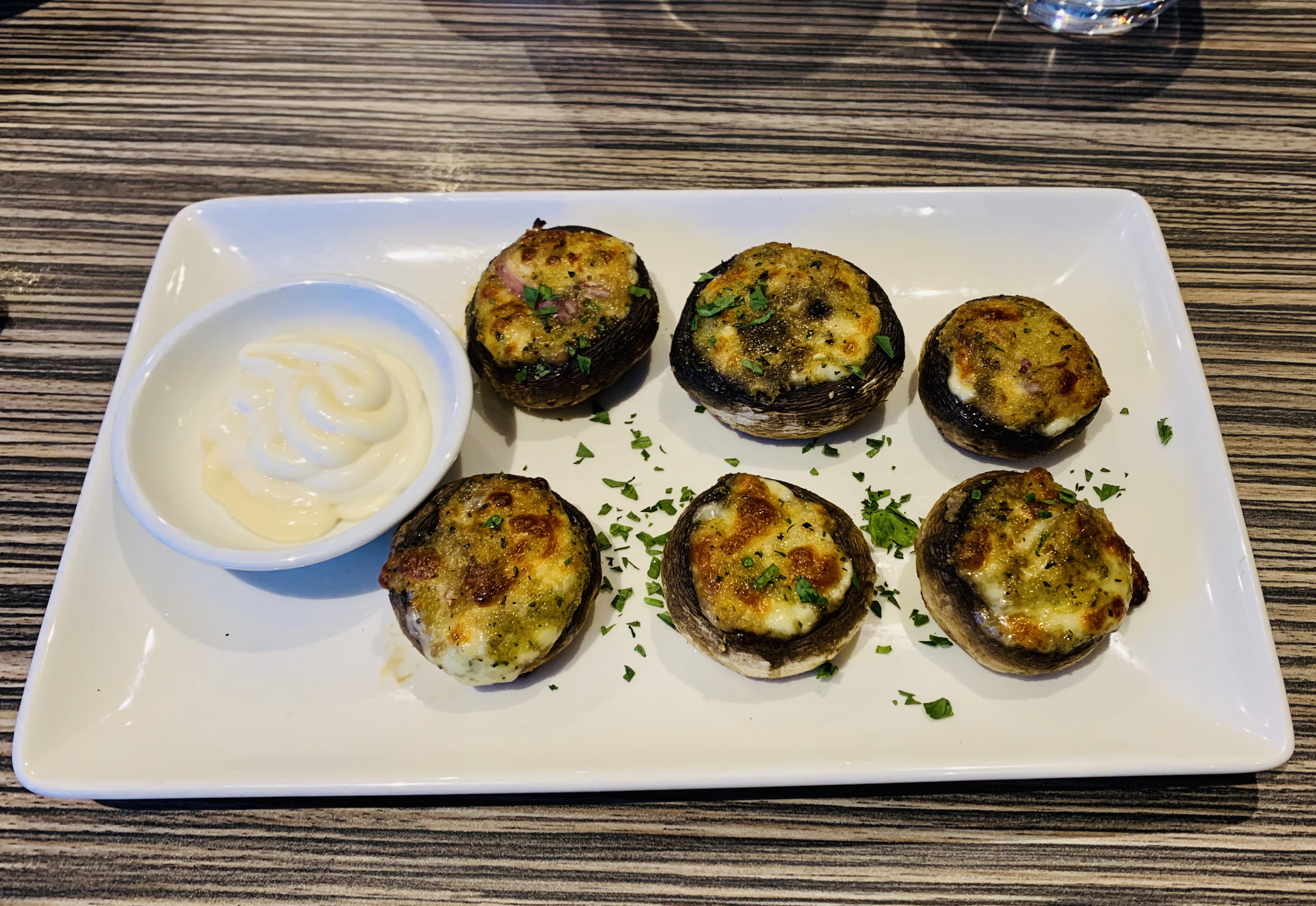
Zoë thinks I am being a little grumpy, and to be fair she ordered better than I did. But her stuffed mushrooms, laid out as if by a serial killer, might have been pleasant enough but I wasn’t sure they were elevated from anything you could pick up and do yourself in M&S. The ones at Papa Gee, in the heart of Caversham, at least have blue cheese in them to give some salt and tang and flavour: no such luck here. The dip seemed to be mayo. Who dips stuffed mushrooms in mayo? Why not just stick a bottle of salad cream on the table and have done with it?
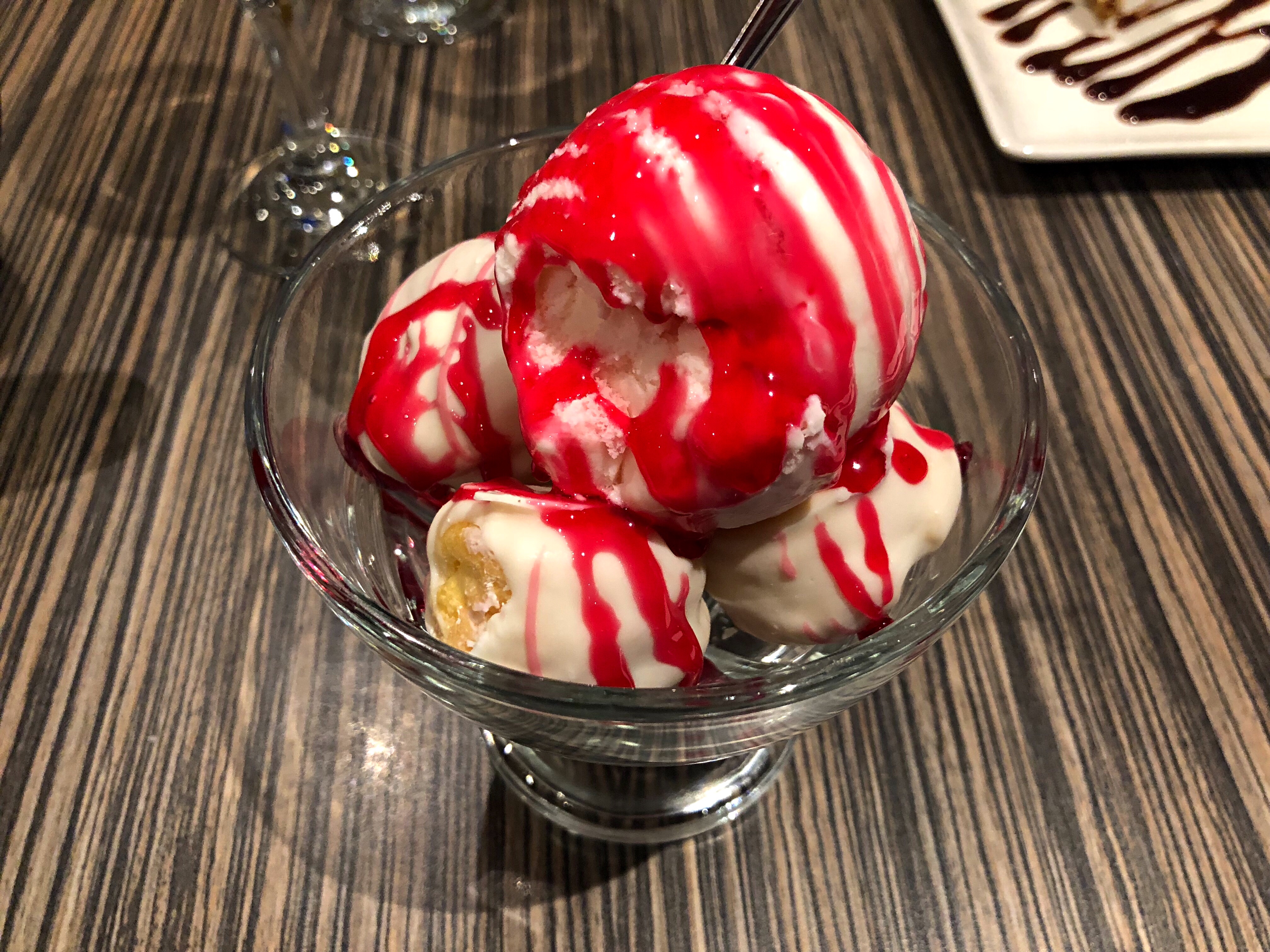
God, and the desserts. White chocolate covered profiteroles filled with Prosecco and raspberry ice cream sounded like they might at least be interesting, but turned out to be one of the ickiest things I’ve had in a long time. They were filled not with ice cream but with cream that tasted of nothing much. The white chocolate was sickly enough, but the Barbie-pink raspberry gloop on top, and the scoop of raspberry ripple ice cream in which almost no raspberry was evident, completed the spectacle. Again, Zoë’s dessert, a honeycomb cheesecake, was a little better but still every other ingredient was shouted down by sugar.
I’d had my doubts about Cozze before going, which mainly came down to looking at the menu several times over the years. Part of that came from my suspicion that they’d taken a kitchen sink approach – would an Italian restaurant really offer chicken wings, moules frites, baby back ribs and peri-peri chicken? Would they really do four different burgers, accompanied by the wording all our burgers some (sic) with fries and are fully cooked? I mean, I know what they were trying to say, but even so.

But more than that, my real problem with the menu was just how many things on it were also on the menu at Prezzo (ironically Cozze has seen Prezzo off in Woodley: that branch has now closed). If you’re a chain, why set yourself up to be a rival to a place like Prezzo? Should that be the place you set your sights on? Again, it says you’re interested in making money, but not particularly interested in food. But if anything, Prezzo’s menu reflects some recentish food trends – there’s burrata, there’s ‘nduja and so on. Cozze’s menu, with none of that to be seen, feels like an Italian chain menu from about ten years ago.

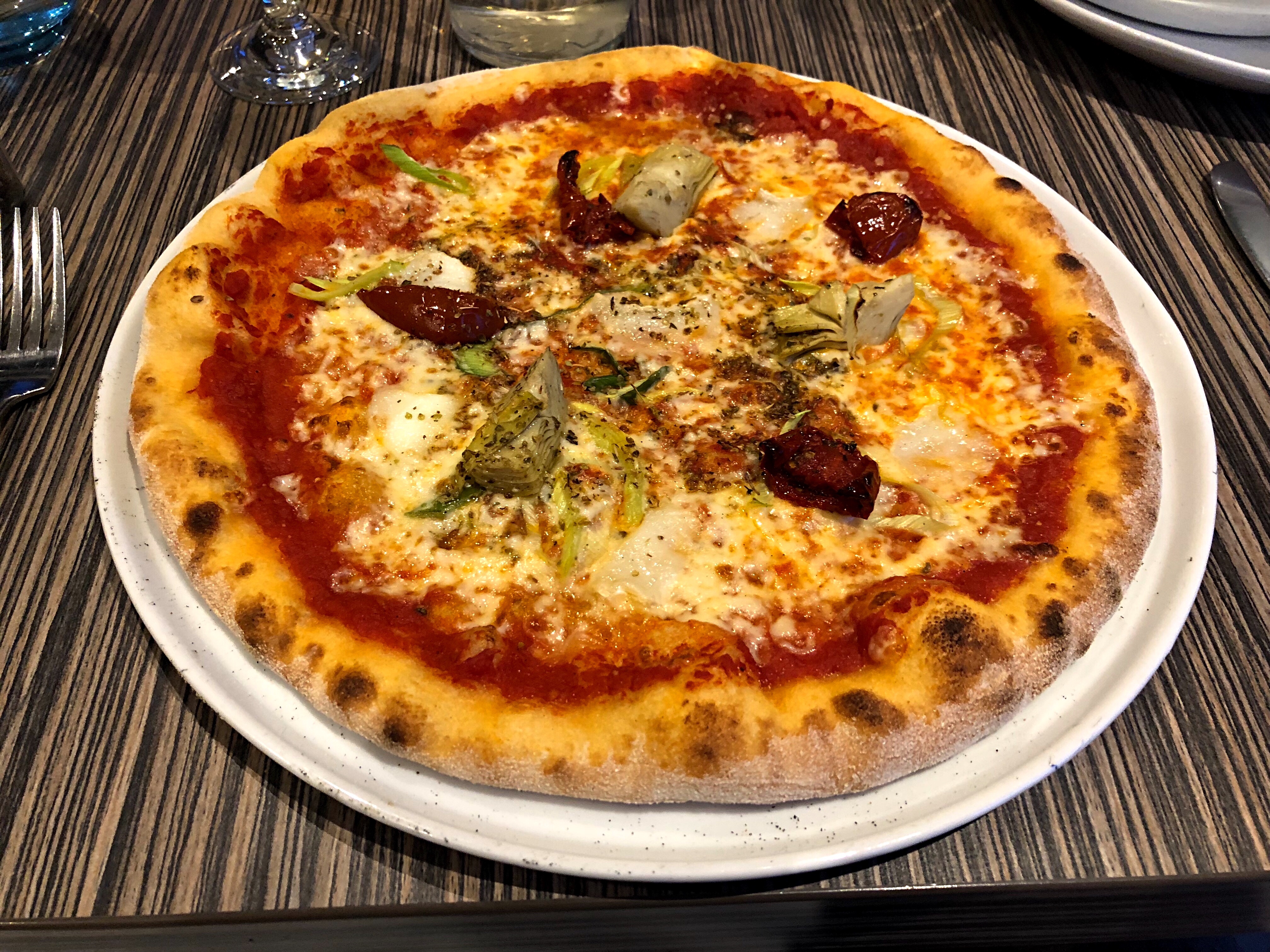
My main was better, although it still wasn’t anywhere near the best pizza in Reading. It had goats cheese (not enough), leeks, four bits of semi-dried tomatoes and three bits of artichoke. Like most of the other things at Cozze it wasn’t actively unpleasant, just objectionably unexceptional. I drizzled some chilli oil over it to try and make it taste of something. The chilli oil appeared to have very little chilli in it – crap as a condiment, perfect as an analogy.
For completeness’ sake, before you or I drop off, I should also tell you about Zoë’s main course which was pollo prosciutto with pomodoro sauce and baby roast potatoes. Pepe Sale does a beautiful pollo prosciutto – a fillet wrapped in Parma ham and stuffed with cheese which you have with seasonal vegetables. It’s perfect: a few ingredients treated simply and with respect. For some reason, they choose not to drown it in chopped tomatoes and serve it in a bowl hotter than the sun like some kind of glorified ready meal. For some reason, Cozze does choose to do exactly that.
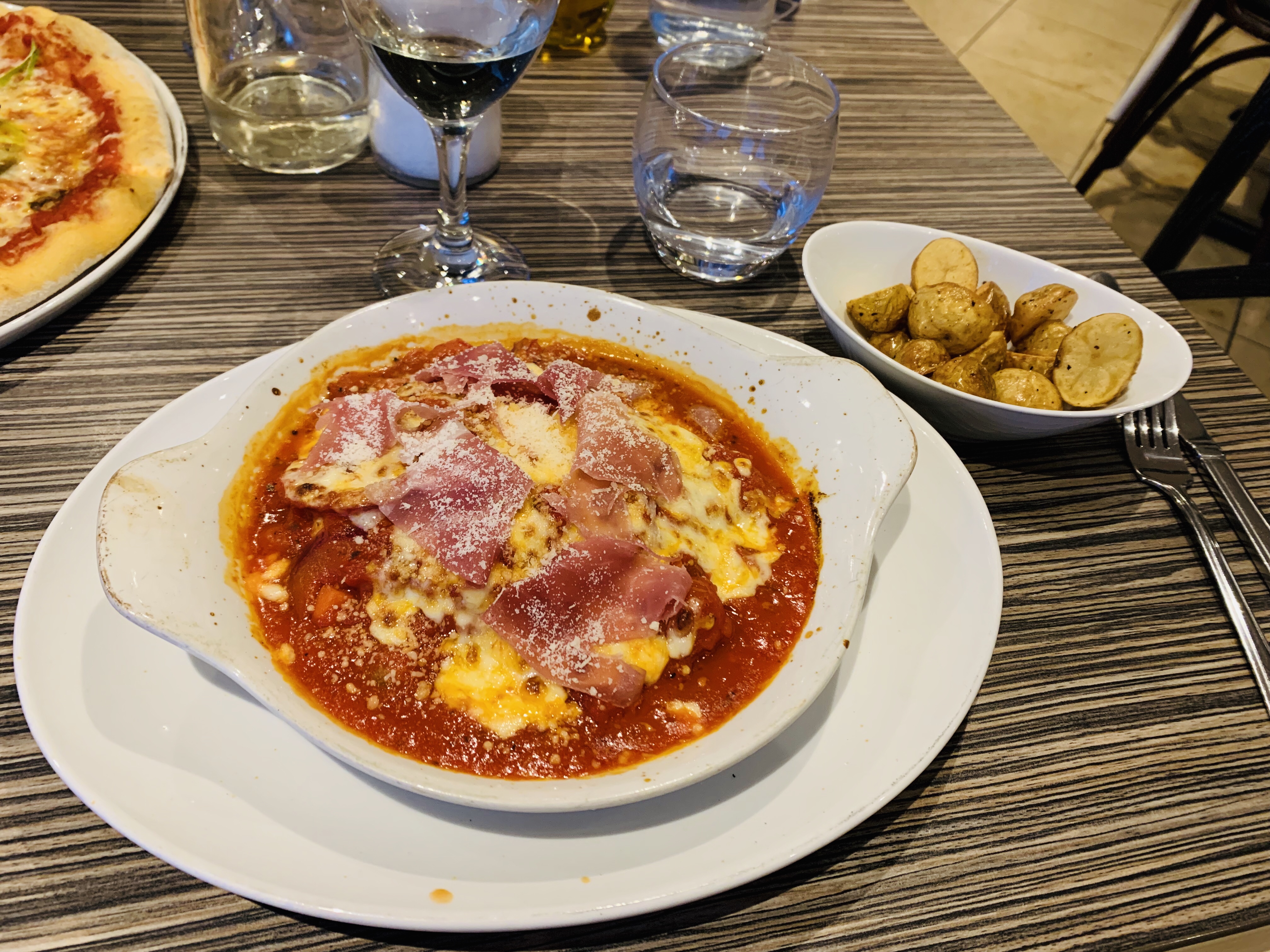
I had a mouthful and wasn’t clamouring for more. My advice, if you ever accidentally order this dish, is to eat it doing your very best to pretend you’re instead eating at Pepe Sale. But if your imagination is that good, you could probably enjoy eating pretty much anything. I used to have a brother in law with nasal polyps so bad he couldn’t taste anything: he’d probably quite like Cozze.

Don’t worry. We’re nearly there and our suffering is almost at an end. It just remains for me to tell you that we shared a five hundred millilitre carafe of Italian Sauvignon blanc which was slightly sweet and perfectly decent and that our meal came to fifty-six pounds, not including tip. That includes a discount because Cozze usually has offers through their website, so if you’re considering eating at Cozze you should definitely make use of them. Although if you’re considering eating at Cozze at this moment, I’ve probably failed as a restaurant reviewer.

You might feel that they caught me on a bad day. You might feel they’re unfortunate to be reviewed the week after I’ve written about eating in Bologna, having truly phenomenal pizza, pasta and gelato. And it’s not that Cozze is bad, to be fair. Nobody died, I wasn’t poisoned, nothing they do is inedible.

It’s just that if Cozze is that answer then “where can we go for dinner that nobody could possibly have any strong opinions about whatsoever?” is the question. The poverty of ambition is the thing I find a terrible shame. Although maybe that’s not fair either: Cozze aspires to mediocrity and, in that respect at least, it has to be considered a towering success. There are worse places to eat, of course. But there will always, easily, be somewhere far, far better.

Cozze – 6.3
93-97 Caversham Road, RG1 8AN
0118 9591459

https://www.cozzerestaurants.co.uk/

Buenasado

My mother taught me this brilliant technique for steak, which she says she picked up from watching Heston Blumenthal on TV. It’s simplicity itself: you let the steak come to room temperature, you oil the steak rather than the pan and you season both sides. Then you get the pan good and hot and you cook the steak for four minutes in total, turning it over every thirty seconds. At the end, you let the steak rest for a little while and Bob’s your uncle: perfectly-done medium-rare steak. I imagine my mother and my stepfather (ever the dream team) cooking the steak together, him with a spatula and her with a stopwatch.

It works without fail, and whenever I cook steak at home my other half Zoë will say, at some point during the meal, “this is so much better, and cheaper, than the Corn Stores.” This is true, if hardly praise of my abilities in the kitchen: the Corn Stores has to be one of the most disappointing restaurant openings of recent years. But also, when she says that, I miss CAU. Poor CAU, which shocked everybody by closing around this time last year because the chain went bust. I didn’t go often, but I always enjoyed my meals there in that funny, purpose-built space, hovering out of nothing at the back of the Oracle.

Sometimes you really do want a steak on an evening out, and since CAU closed I’ve been stumped whenever people ask me where I recommend. The Corn Stores is out of contention, which leaves Miller & Carter, another restaurant I’ve never really warmed to. So I’ve taken to recommending Pepe Sale’s tagliata alla rucola, a beautiful piece of fillet with rocket and balsamic vinegar. But then Buenasado announced it was opening in CAU’s old spot, and I found myself hoping we’d get a decent steak restaurant after all. Research showed they had one other branch, in well-to-do Surrey, and the reviews looked good – even if the menu appeared to be a carbon copy of CAU’s.

Subscribe to continue reading

Become a paid subscriber to get access to the rest of this post and other exclusive content.

Global Café Kitchen

N.B. RISC announced in June 2021 that the Global Café Kitchen would remain closed until 2022 and that when it reopened it would be run by RISC, so this review is defunct. I’ve left it up for posterity.

Reading’s vegetarians and vegans have never been served terribly well. Back in the day there was Café Iguana, which I still miss (my order was usually a Roma toasted sandwich and their delicious, if whiffy, garlic and herb fries). It was scuzzy but lovable, the service was haphazard and the whole thing was distinctly, well, nineties, but I was very sad when it closed. For a long time after that, the only destination for vegetarians was the brilliant and unsung Bhel Puri House, and plenty of people didn’t even know it existed.

It’s only in the last couple of years that things have started to shift. We’ve seen restaurants raise their game: now there are many places with credible meat-free (or plant-based, or whatever you want to call it this month) options. So now we have Pho where most of the menu can be made vegetarian or vegan, Clay’s Hyderabadi Kitchen which has an excellent vegan selection, and Honest which first introduced an excellent vegetarian fritter and then added a trailblazing vegan burger. I keep meaning to do a round-up of the best places for vegetarians in Reading – another gap in the market – and the main thing that delays it is the growing plethora of options.

In parallel, Reading saw two completely meat-free venues open this year. The first, Miami Burger, offered a vegan take on American fast food and closed its doors last week shortly after announcing a deal to sell its products in Morrisons. A cynic could almost believe that the restaurant was always just a shop window to land that kind of contract (a conspiracy theory hardly helped by Miami Burger rewriting history to describe the Reading restaurant as a “test kitchen”).

Either way I never visited Miami Burger – known to some as “Brexit Burger” because of the political views of its owner, a man who left the Tories for UKIP and once pondered on his blog whether the unemployed should have their votes taken away – and I’m not convinced I’ve missed much. Besides, for five pounds you can get one of Bhel Puri’s amazing vada pav, and that’s more than enough veggie burger for me.

The second meat-free restaurant is a more interesting proposition. Global Café for many years was home to Tutu’s Ethiopian Kitchen, a much-celebrated Reading establishment which left me baffled when I visited it on duty many years ago. Tutu left this year to take over a site in Palmer Park which used to belong to the Chalkboard Café, and as a result Global Café has taken on a new chef and is offering a regularly changing vegetarian and vegan menu under the moniker Global Café Kitchen.

I was having a drink at Global Café with my mother and my stepfather the fateful night we went to review Lemoni, and looking at their menu I was very tempted to change our plans and eat there instead. It was small (four or five main courses and a couple of starters) and reasonably priced (mains were around a tenner). But most crucially, it all looked worth eating: from a tempura mushroom burger to a vegetarian rendang, from Sri Lankan dahl to a halloumi and tabbouleh salad, I could happily have ordered practically anything on the menu. I wasn’t alone, either; my mother in particular would much rather have eaten at Global Café than Lemoni, so much so that we agreed to come back the following week and give it a whirl, with my stepfather in tow.

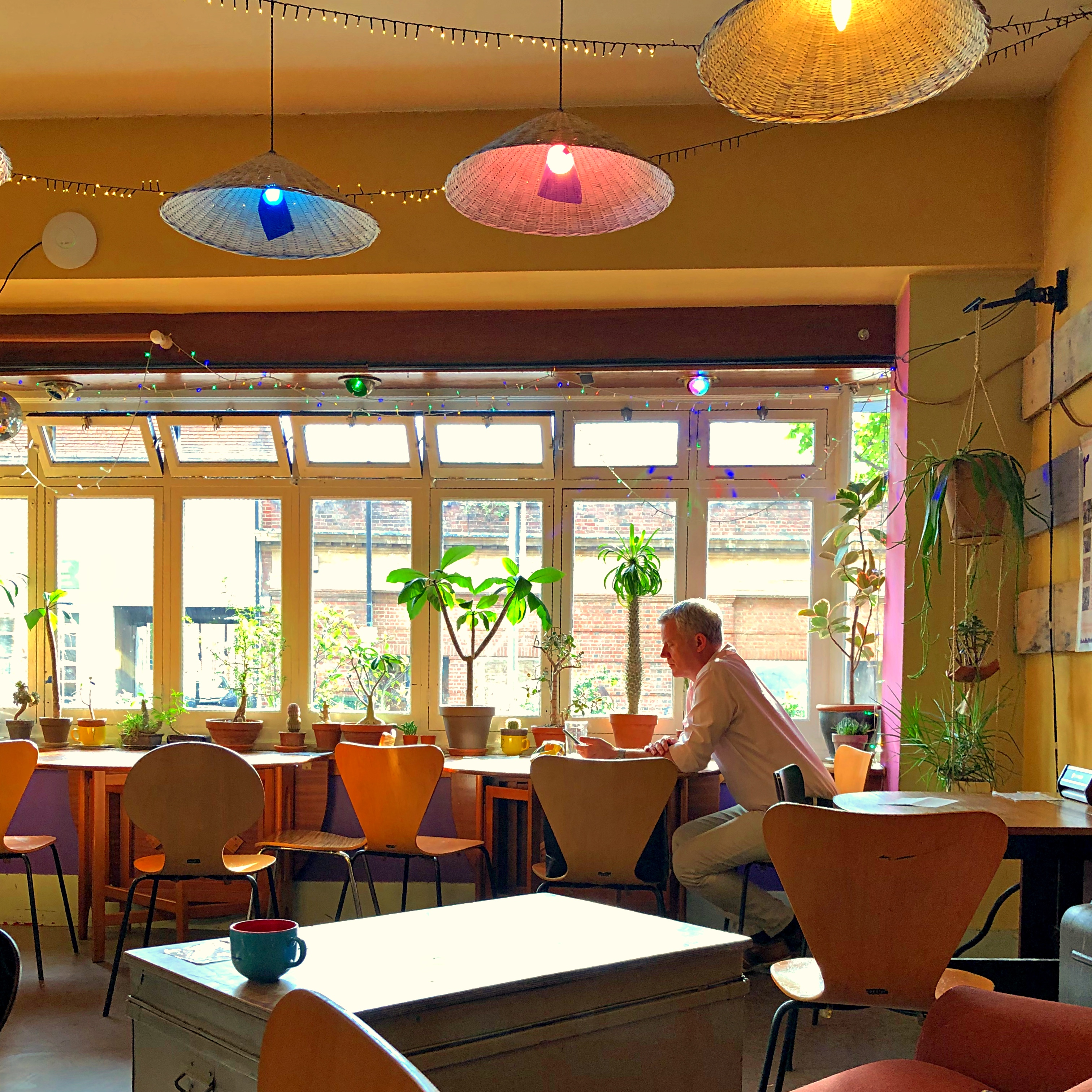
The Global Café hasn’t changed in many years, and I suspect you either think it’s one of the last great Reading institutions or an anachronism you haven’t felt the need to visit for a very long time. I veer more towards the former – even though it’s a tad on the scruffy side I’ve always had a soft spot for it. The area at the front, near the bar, gets lots of light from the lovely big windows and if all the tables and chairs don’t match and don’t seem to be designed for eating at or drinking at, it doesn’t necessarily matter. Nor does it matter that there’s a sofa randomly plonked there, with a big metal trunk serving as a table. It’s Global Café: that’s just how it is.

My stepfather found the long trip downstairs to the loos genuinely alarming (“it smells of damp down there”) and was a bit baffled by the different-coloured lights in the wicker lightshades (“you’d think they’d be LED bulbs, wouldn’t you?”) but I wouldn’t describe him as the target market for this kind of place. He was more impressed with the selection of local beers, as was I, but because it was a school night the three of us opted for an alcohol-free Erdinger Blue apiece while we decided what to order. It’s my top tip for anyone who likes the taste of beer and wants to cut down on their alcohol intake – and it cost less than £3 a bottle, considerably cheaper than the crazy prices charged at some of Reading’s pubs.

There were only a handful of starters, but all the mains from our previous visit were still on the menu, along with a couple of specials – a spiced potato and cheese “Bombay burger” and what was described as a “Banana Blossom burger”.

“What’s the banana blossom burger?” I asked the dreadlocked chap behind the bar (no table service, so that’s where you place your order).

“It’s not made from banana, it’s another part of the banana tree. It sort of has the same texture as chicken.”

“Sounds interesting.”

“They’re changing the menu all the time. I’m not even a vegetarian, but I really like the food here.”

“How long have you been running the new menu?”

“About three months, we’re still getting used to it really.”

I wasn’t sure whether this exchange inspired confidence or eroded it – but I liked his honesty and I liked the sound of the banana blossom burger, so I changed my mind about what to eat and ordered it instead.

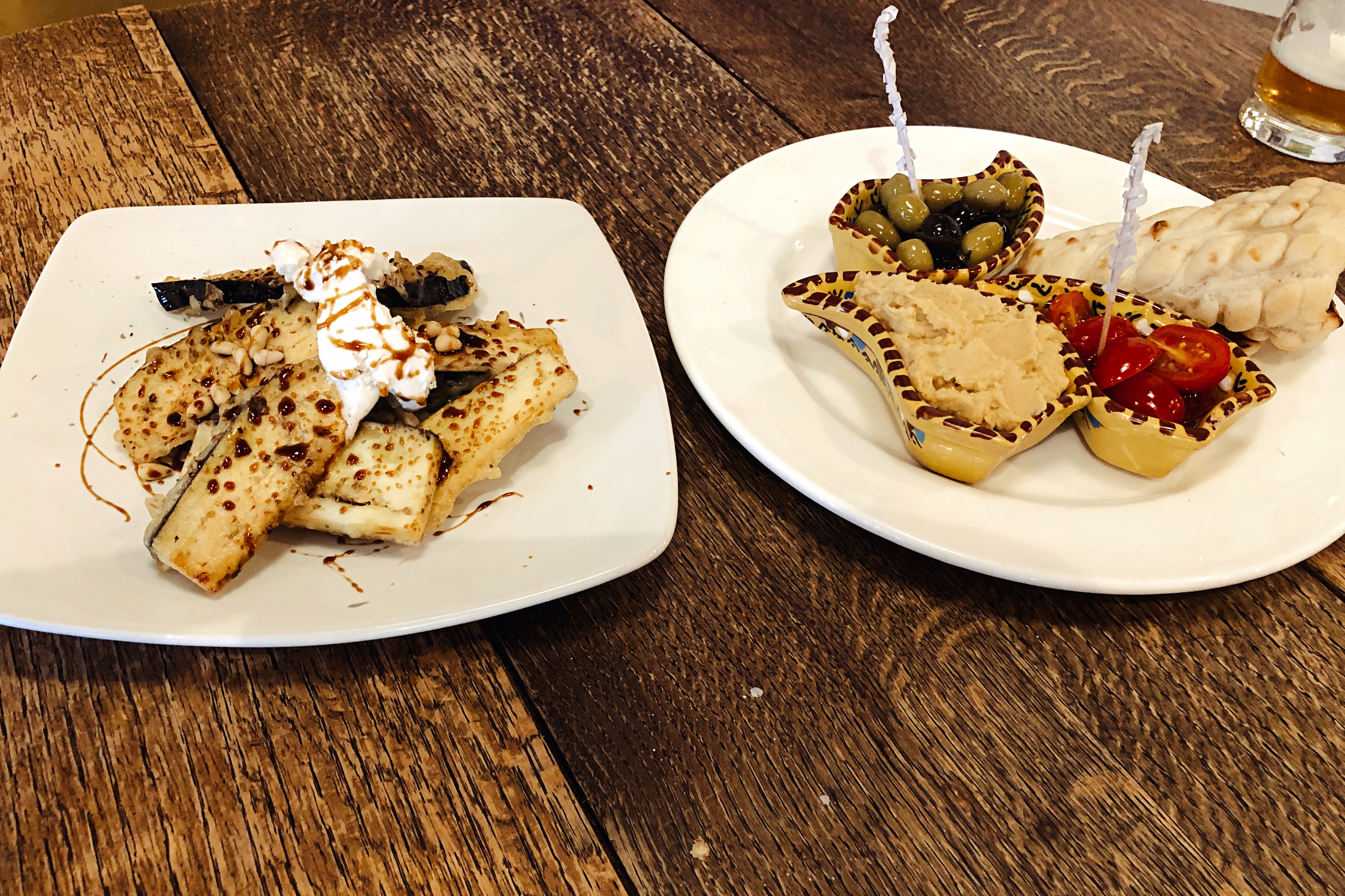
Our starters arrived reasonably quickly, brought I think by the chef. The menu had three, one of which was soup, so we ordered the other two planning to share them. The best of them was the crispy fried aubergine, cooked with a beautifully light touch and free of all the stodge and mulch I associate with aubergine done badly.

This stuff was better than versions I’ve had of the same dish, berenjanas con miel, in Andalusia and the little tweaks to make the dish vegan only added to the appeal: vegan labneh had a very pleasing touch of coconut, and the miel de cana (vegan honey) was hard to distinguish from any other kind of honey. We all ever so politely made sure we had our fair share before nicely bargaining over the final piece. A really good dish, although at six pounds it felt like it should have been a bigger portion. “I could have eaten one of those on my own” said my mother, echoing my feelings. Still, I guess that’s what happens when you share two starters between three: if you go, order your own.

The other starter was a very different kettle of quinoa. Flatbread with marinated tomatoes, olives and dip sounds like just the thing to graze on while you wait for your food to arrive, but this was a lukewarm warm-up act. The tomatoes – cherry tomatoes halved – were pleasant enough, and the olives, small and pitted, were the kind of thing you could get in any supermarket.

The houmous, though, was worse than anything you could get in a supermarket – I’ve no doubt they made it themselves, but it had no lightness, no evidence of olive oil or garlic or tahini. Calling it a dip was optimistic because it didn’t have the texture for dipping: you’d have had more luck using it to cement a wall. We did our best to scoop it on to the heavy, unremarkable flatbread.

This rogue’s gallery came to four pounds – for the same money you could have a much bigger bowl of the best houmous in Reading just up the road at Bakery House, and they’d throw in piping hot, fresh-from-the-oven pitta bread into the bargain. It felt like the restaurant had bought those little, weird-shaped dishes, and then struggled to decide what to serve in them. The answer, I think, is Not this.

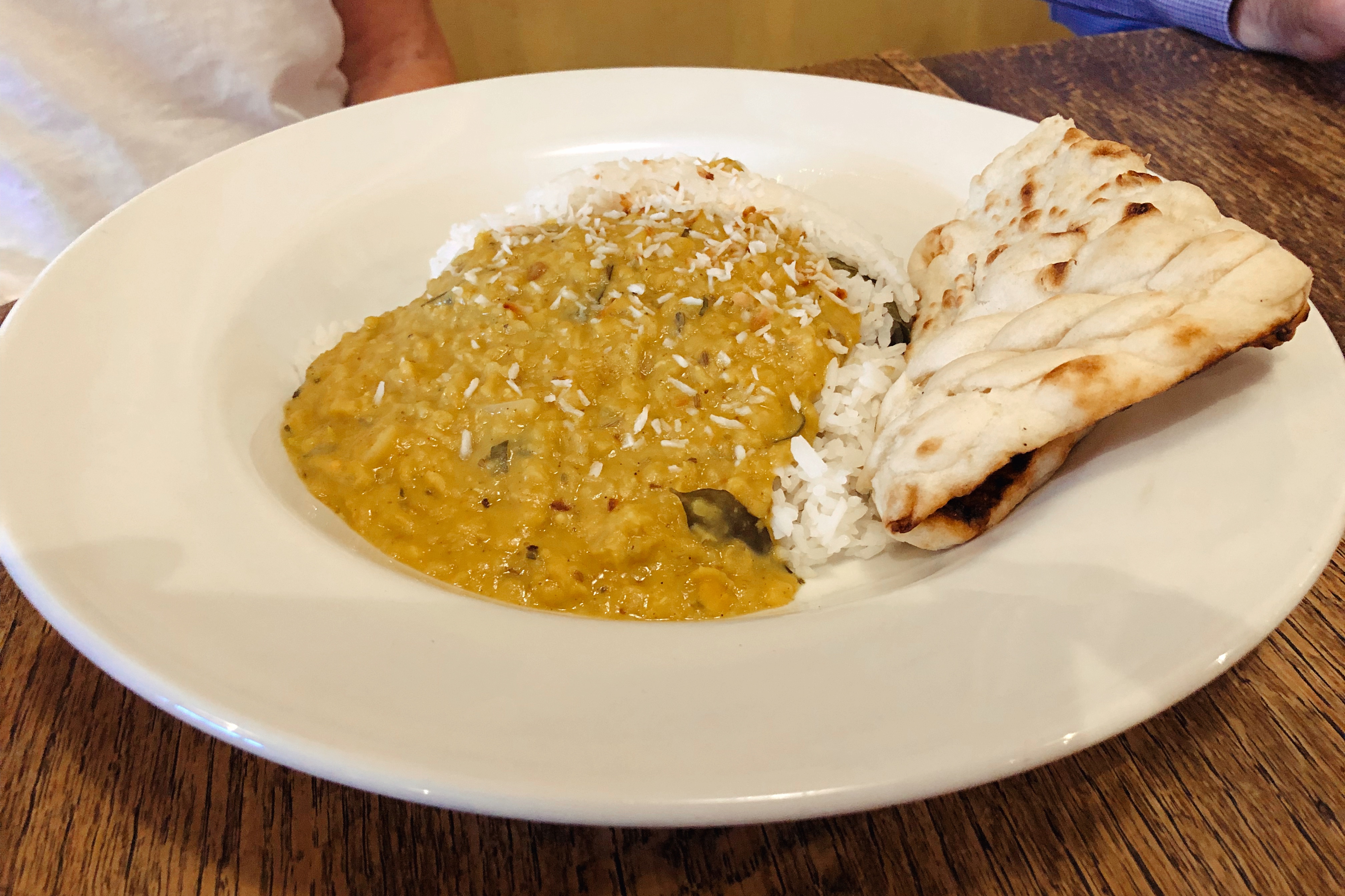
The themes of the starters – glimmers of talent, inconsistency and slightly sharp pricing – followed through to the main courses (which arrived pretty quickly), although these were generally far better. My mother’s choice, the parippu – Sri Lankan dahl – was earthy and creamy with a nicely gradual heat. Her verdict was that it was “a bit monotonous” – although I suspect that, texturally at least, that’s always the way with dahl. The toasted coconut on top helped, but it needed something like toasted seeds for texture and what it really needed was plenty of fresh coriander. The rice was somewhat clumpy – brown rice might have been better – and the flatbread wasn’t required: there wasn’t enough of the dish to be able to use it. If that all sounds like faint praise, it shouldn’t entirely – I enjoyed it, but even at eight pounds it felt like it could have been a little bigger and better.

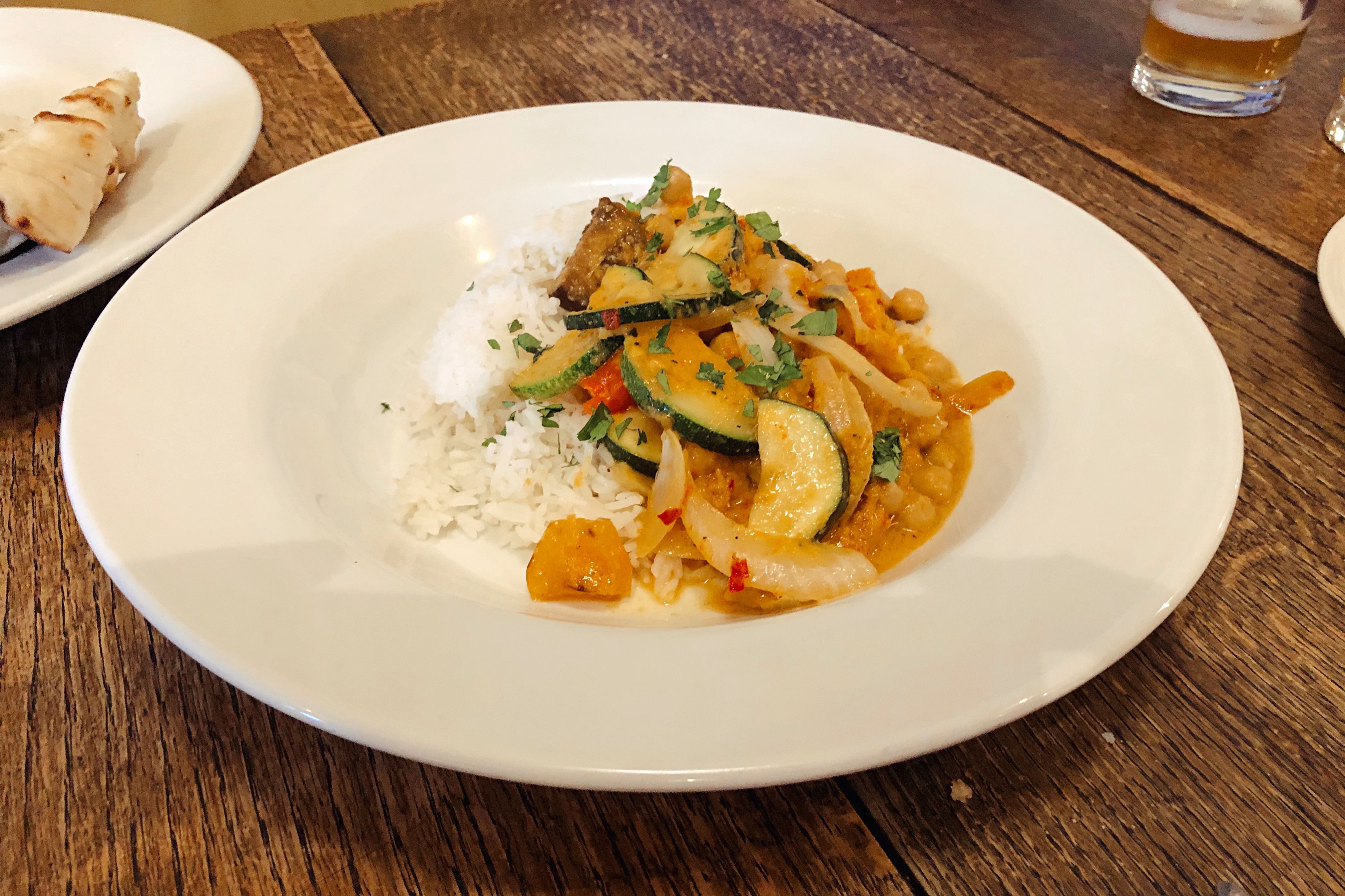
My stepfather had chosen the rendang – in this case a chickpea curry with aubergines and courgettes. I’m used to rendang being made with long-cooked, sticky strands of beef and having an intensely savoury taste. This dish didn’t have any of that, feeling more like a massaman or a Thai curry with as much sweetness as heat, if not more. Again, I liked it, and again I felt that it was a little keenly priced: eleven pounds for this one. My stepfather seemed to enjoy it, too, and polished it off in short order.

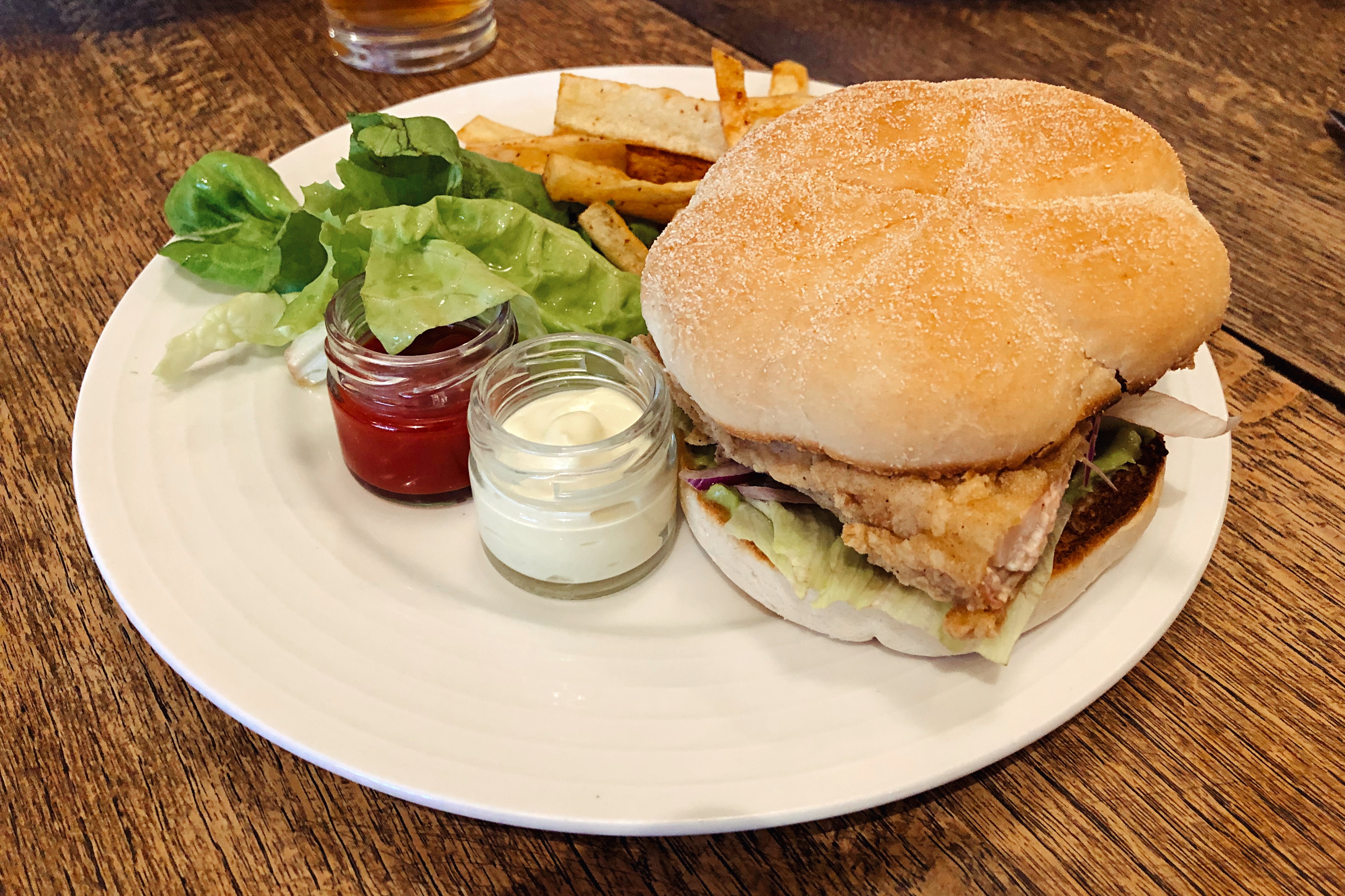
This brings us to the appropriately alliterative banana blossom burger, which I’m delighted to say was an eye opener. It didn’t have the texture of chicken, after all that: it reminded me more of artichoke hearts, and you got a couple of pieces rather than a single patty. But the coating around the banana blossom was very good – salty and savoury, reminiscent of shame-free KFC. The bun was strong enough to stand up to everything in it (so unlike, say, Honest’s buns which always seem to go soggy at the bottom) and the ripe avocado and mango mayo in it finished it off nicely.

This was a revelation to me, and I hope Global Café Kitchen moves it off the specials menu so more people can try it. A chap at the table next to me ordered it and when it arrived at his table I butted in to enthuse to him about how much I’d liked it. “It’s a bit like KFC!” I said, to which he mournfully replied “I’ve never had KFC” (I asked him his verdict as we were leaving: he thought it was too salty, so Christ knows what the poor guy would actually make of KFC).

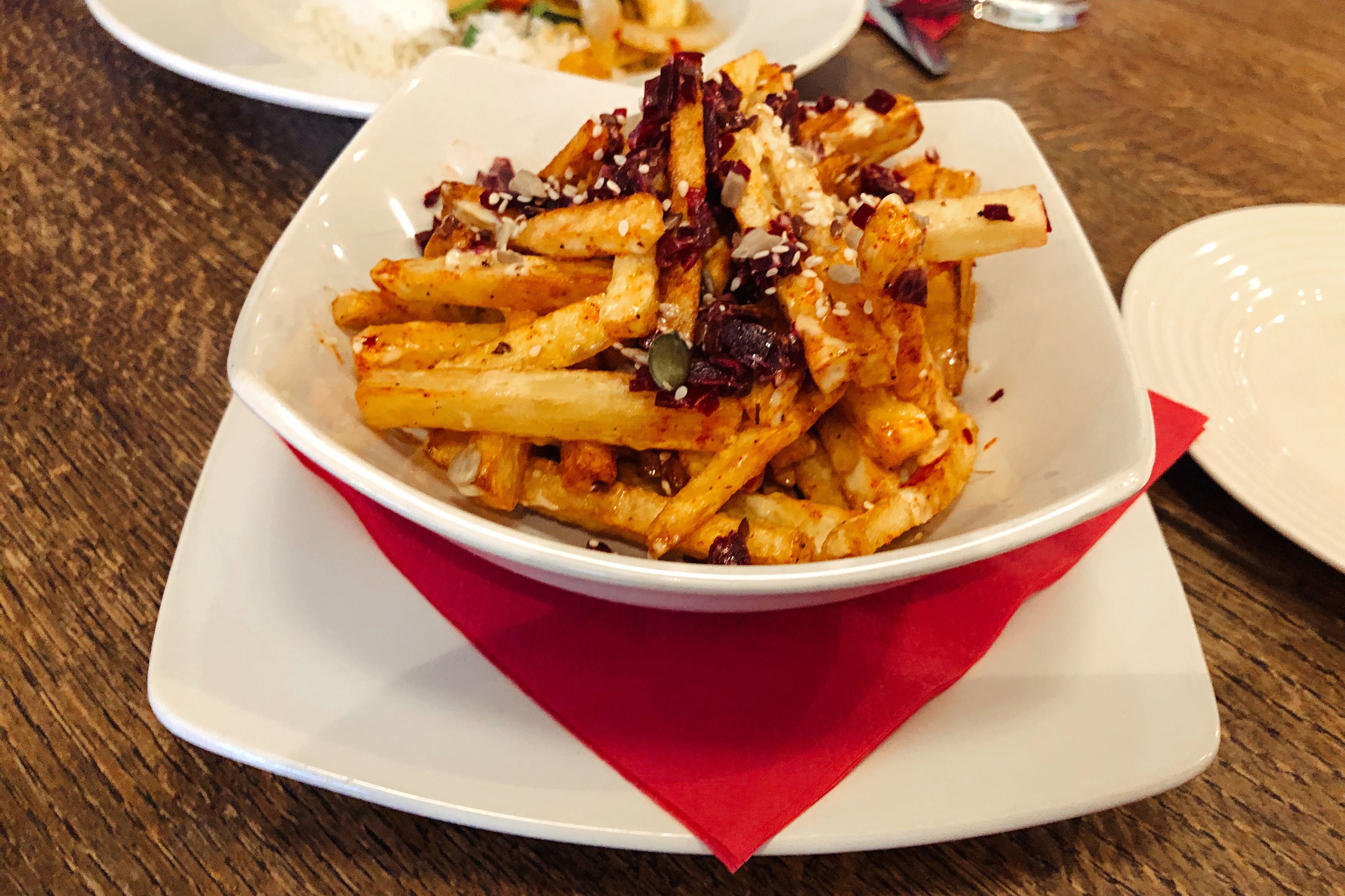
Also, I really liked Global Café Kitchen’s fries – clearly hand-cut and prepared on the premises – and the sweet tomato sauce and (presumably) vegan mayo they came with were both tasty, too. My stepfather had some “dirty fries” although it wasn’t clear what made them so sinful or indulgent: the “beetroot aioli” mainly seemed to be finely diced beetroot and the sesame seeds felt a bit unnecessary. They were still very good, though, because their fries are very good.

There isn’t much more to say about Global Café Kitchen than that – there was no dessert section, and we’d been fed so quickly and efficiently that there was nothing more to do but to head out. Our whole meal – two starters, three mains, those extra fries and three beers – came to almost bang on fifty pounds, not including service.

Service was really friendly and likeable but had a general air that they were still getting the hang of things. We had to ask for side plates, for instance, and the speed with which our mains came out gave the impression that the restaurant didn’t have masses of customers, so was used to just cooking things and getting them out of the door almost straight away. Three months should be long enough to get those teething troubles under control but, much like everything else about Global Café, I was prepared to overlook some of the less polished aspects.

Reviews like this are the hardest to conclude. A hatchet job writes itself, a rave review also builds to a natural, logical crescendo, a rallying cry of sorts. It’s far more difficult to write the sort of nuanced summary that makes half your readers think the mark at the end is far too harsh and the other half believe that you’ve let a restaurant off the hook. All the same, here goes: much of what I ate at Global Café Kitchen wasn’t perfect, and much of what I liked felt too small or too expensive (or ever so slightly beige) but in terms of imagination and range there is still plenty to celebrate.

They offer a genuine vegan menu (nearly all the dishes are vegan, and they say the rest can be made vegan on request) which offers a wide range of dishes, tries different meat substitutes rather than just doling out the same old tofu and – most crucially – offers real and interesting choices. I could have ordered any of the main courses we tried that night, and a couple we didn’t, without feeling like I was missing meat at all. There’s a lot to be said for that – whether you’re vegetarian or vegan, or know somebody who is that you’d actually like to have dinner with once in a while. Or, for that matter, if you’d just like to do your bit to eat more sensibly and help the planet from time to time. That you can do so without donning a hair shirt is quite an achievement, even if in 2019 it shouldn’t feel that way.

I never made it to Miami Burger – deliberately, I’m afraid – but the one thing I heard about it from my vegan followers was how nice it was just to have somewhere where they could order everything on the menu. Those people should make their way to Global Café and support a kitchen that may not be doing everything right quite yet but definitely has the right idea. And the rest of us? We should consider following suit from time to time, and supporting a Reading institution – one which, it seems to me, has picked up the torch from Café Iguana and is doing its best to carry it forward into an uncertain future.

Global Café Kitchen – 6.9
35-39 London Street, RG1 4PS
0118 9583555

https://www.risc.org.uk/global-cafe/global-cafe-kitchen

Kungfu Kitchen

As of June 2024, Kungfu Kitchen has moved to a new site on 62 Christchurch Green, a minute’s walk away from its old site.

I love lists, to an extent which probably verges on unhealthy. At any given time I have several on my phone: things to do; shopping to get; household chores to finish; people to see. I enjoy the feeling you get – and if you’re wired like me, you’ll understand what I’m talking about – when you add something to a list for the sole reason of immediately ticking it off. Really, I ought to have a list of all my lists where I rank them in order of preference, but even I know that might be taking things too far.

Anybody with a to do list will also know that there’s always at least one thing on any to do list that you keep shunting to the bottom. You look at it, you’d like to be the kind of person who tackles it right away, but in the end you know you’re really the sort to leave it to another day. Some days, every item on your to do list looks like that: those are the days when personally, I’d rather just stay in bed.

Kungfu Kitchen, the Chinese restaurant on Christchurch Green, has been on my reviewing to do list all year without ever getting to the top. There’s a website, which is stunningly uninformative, and a Facebook page which has a couple of decent-looking photos but nothing more. They’re on Twitter, but they haven’t Tweeted this year. (N.B. Following this review Kungfu Kitchen has updated its website with a full menu – the link is at the end of this review – and has become much more active on Twitter.) The menu looked on the authentic side, as far as I could tell, but the Tripadvisor reviews were mixed to put it lightly. So my regular accomplice Zoë and I walked up the hill towards the university area with a certain degree of trepidation, not at all sure what to expect.

Subscribe to continue reading

Become a paid subscriber to get access to the rest of this post and other exclusive content.

Revolución de Cuba

Revolución de Cuba closed in January 2026. I’ve left the review up for posterity.

Let’s get this out of the way straight away: it’s not a typo, you don’t need to adjust your set and you definitely don’t have to pay Specsavers a visit. This really is a review of Revolución de Cuba, Reading’s Latin American bar slash (chain) restaurant.

You might wonder what possessed me. Here’s what – I’ve been complaining for some time about Reading lacking a good tapas restaurant, a feeling which was compounded by a holiday in Granada at the start of the month. I returned even more bereft that I couldn’t find somewhere good to eat jamon, manchego, croquetas or chorizo in cider (let’s not dwell on the fact that in Granada you get something free with every beer: one step at a time).

On my first day back in Reading I sat in the courtyard outside Workhouse Coffee and ate paneer from Bhel Puri House while enjoying a crisp Estrella from the hotel bar next door, and it made a decent substitute but I still found myself wishing Reading had somewhere more suitable. That’s when the idea of trying the tapas menu at Revolución de Cuba entered my head.

After all, it might have been a chain but it was hardly a big one: less than twenty branches across the UK. And although it was part of the same group as Revolution, I’d been pleasantly surprised when I went to Revolution on duty back in 2015 (that said, I’d never been back, probably assuming that lightning never strikes twice in the same place). So on a Monday night I mooched over to Friar Street with my regular dining companion Zoë, wondering if my expectations would be surpassed.

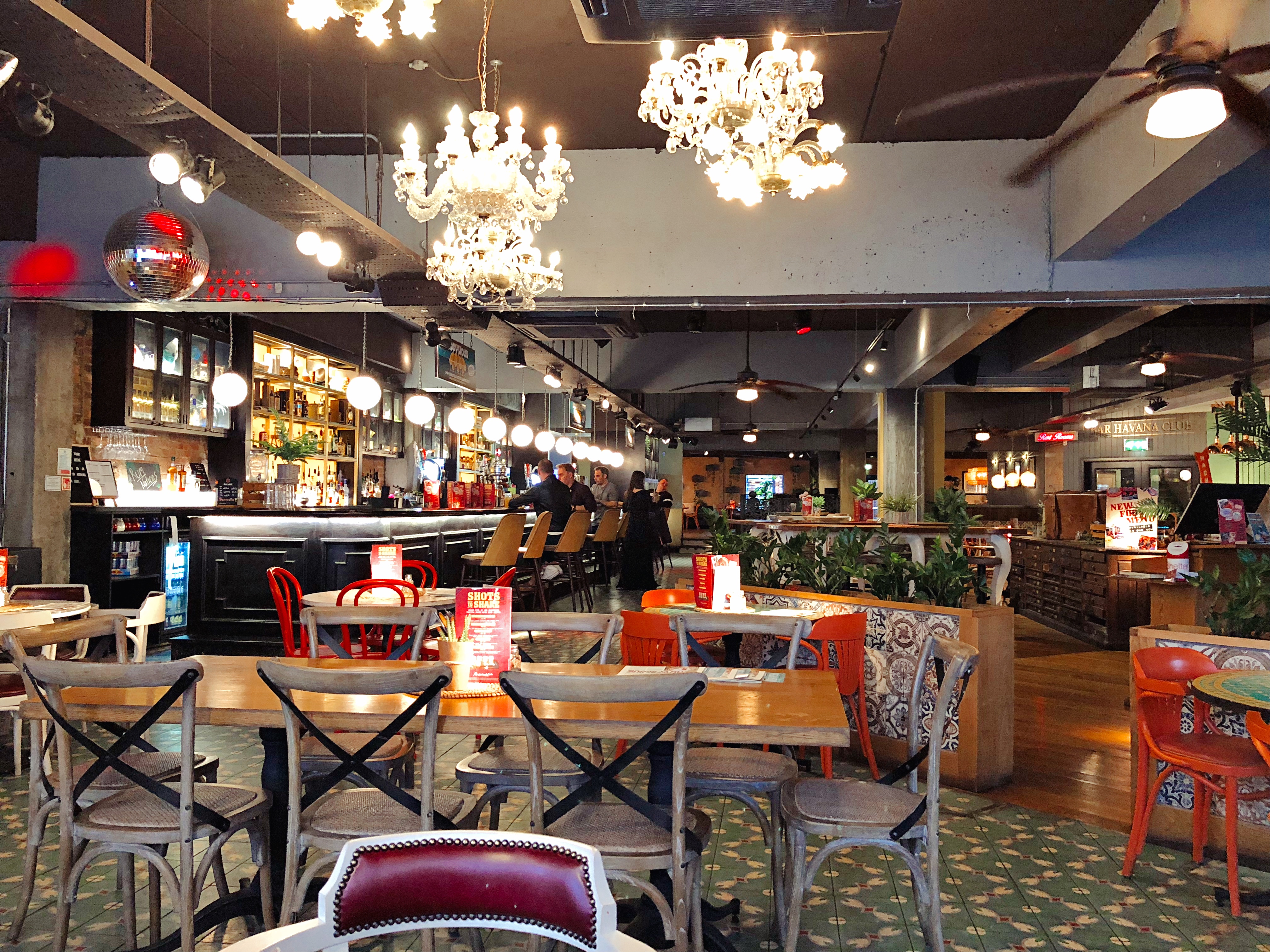
My first impression was that it’s a striking – and gigantic – space. It used to be the old HMV building (I have plenty of happy memories of those days) and Revolución de Cuba waited a long time to open here, initially applying to take over the site in late 2014 and wrangling with the council before eventually opening two years later. The fit out had been nicely done – the long bar down the left looked especially inviting – and the room went back a very long way indeed, gradually getting darker and more conspiratorial.

Actually, that was probably my second impression. My first impression was that I wasn’t sure if I was in a bar or a restaurant, whether I could just plonk myself at a table or wait to be seated and whether it was bar or table service. We stood waiting near the front like lemons for some time before a solitary waitress told us to sit anywhere, before going on to explain that the two areas nearest to the front were probably more suitable for dining.

That might have been a more useful distinction at weekends when the place was busier, but when I went the place was pretty dead; there was a couple sitting at the tables nearest to the window, but the only thing they seemed to be eating was each other (in broad daylight on a Monday evening: I didn’t know whether to be appalled or impressed). Gladly they put their coats on and left seconds later – headed for the nearest Travelodge, I imagine – so we took the table next to where they’d been sitting. Was it my imagination, or did the banquette reek of sex?

The menu looked nice enough, although I don’t think it was the thing that had got them so frisky. It was divided into tapas and main plates, and was a mixture of Spanish, Tex-Mex and general 2019 box-ticking (halloumi, pulled jackfruit and so on). The tapas tended to come in around the six pound mark with three for fourteen pounds, so we decided to go for that, along with a couple of sides. While we waited for our food to turn up I had a pint of Angry Orchard which was just what I needed and not too dry (albeit oddly named: why so cross? Had it been reading the BBC website?) and Zoë had a bottle of Pacifico Clara, a serviceable crisp lager not that distinguishable from Modelo.

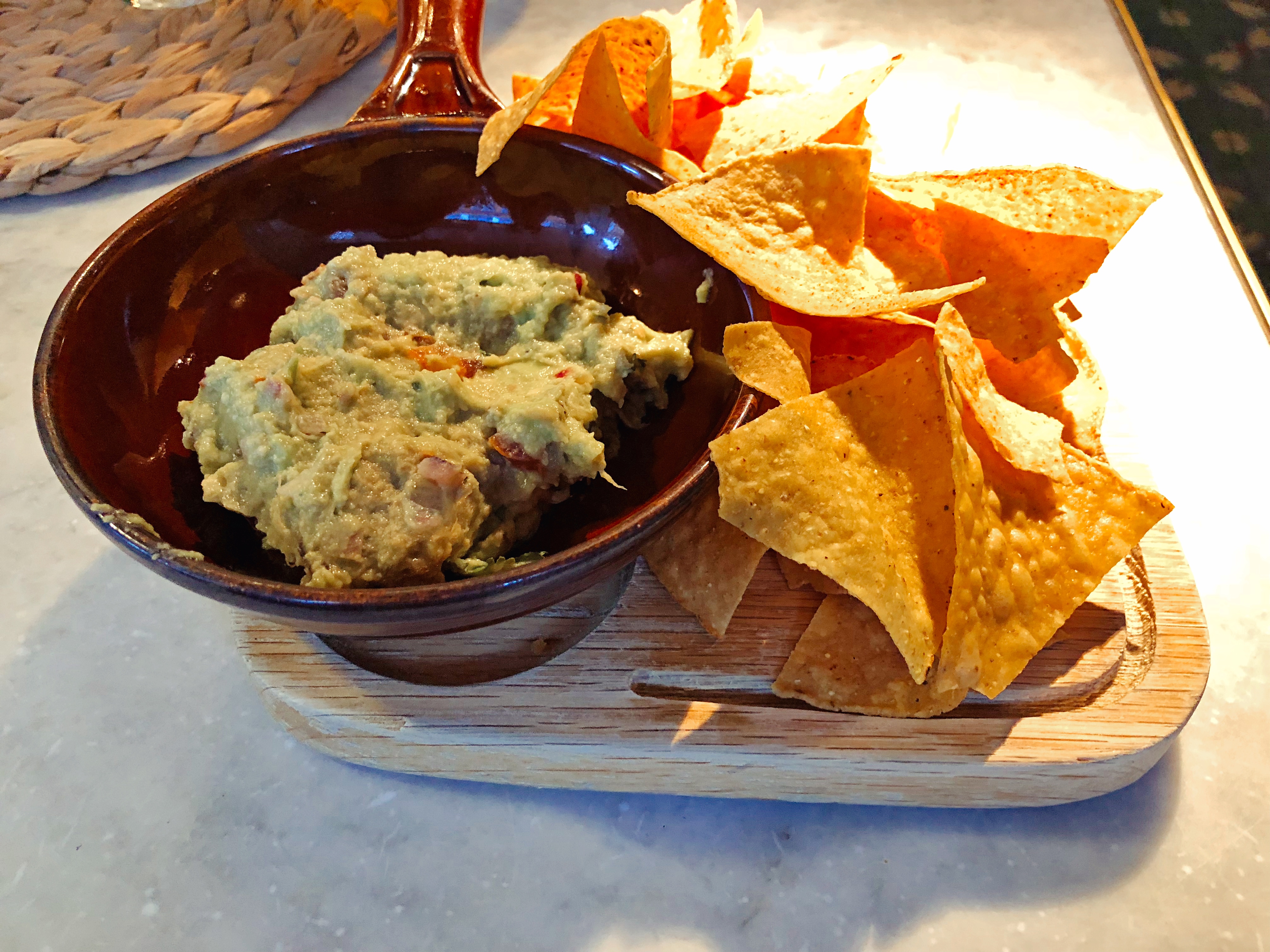
We’d asked for some guacamole and tortilla chips while we made up our mind, so this was the first thing to come out. A sign on the wall said it was freshly made, and although I wasn’t entirely sure it had been made to order it was decent, with just a little heat lurking in there. The previous week I’d been to Wahaca on the South Bank and their guacamole was better (as I had expected it to be) but not by a country mile. The tortilla chips were a little wan and not quite up to the job of dipping but again, for three pounds I was hardly devastated.

The tricky bit is what happened next: all the rest of our food was brought out at once. This wasn’t a problem in itself: god knows I’ve been known to bitch about the likes of Wagamama bringing out dishes as and when they’re ready, but for tapas this style of serving seems much more appropriate. But the real problem was that although the dishes were all brought out at the same time, some of them had clearly been sitting around a while. So much of what should have been piping hot was verging on tepid, and in many cases that made a world of difference.

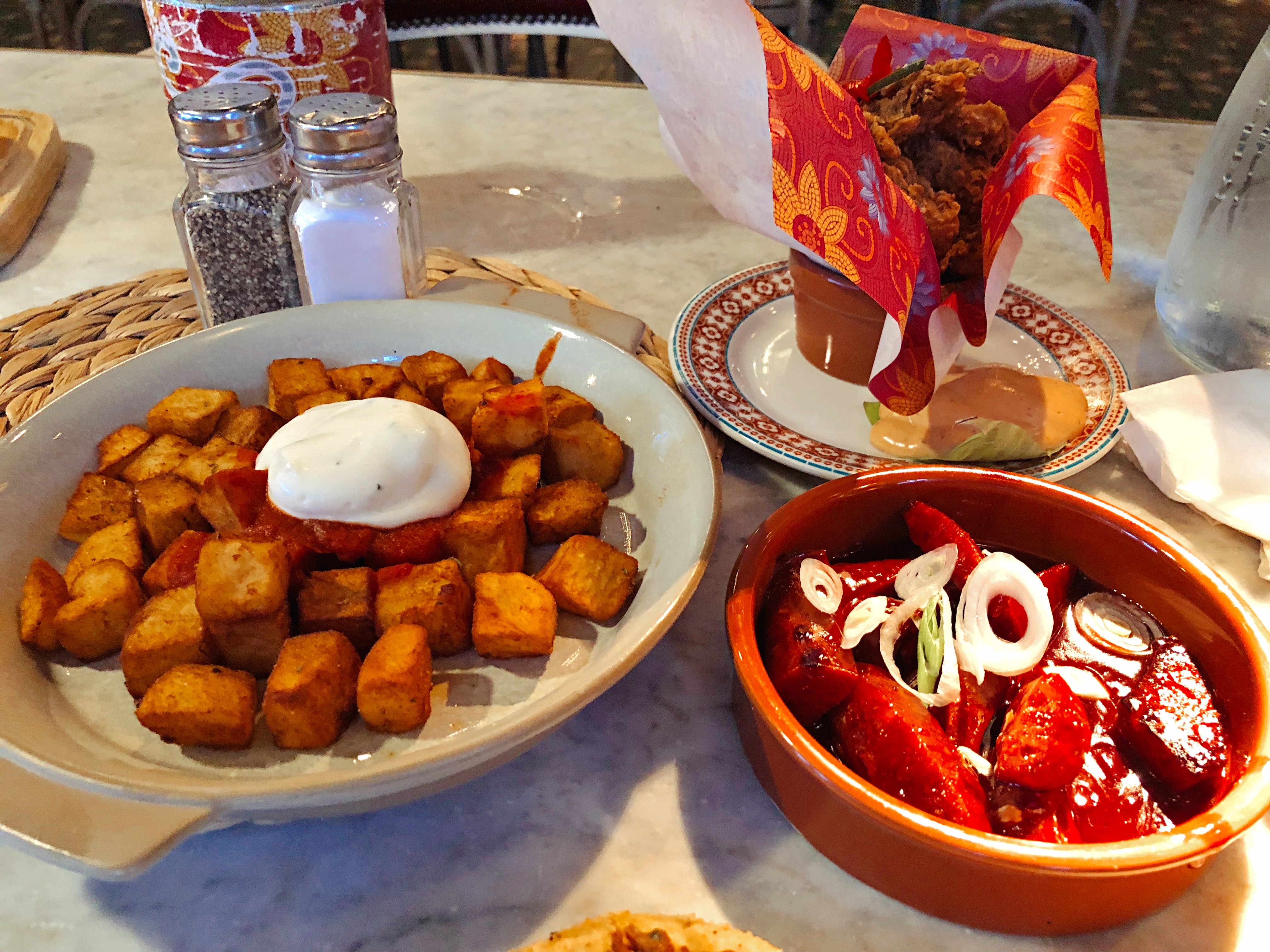
Take the chorizo in red wine and honey, for instance. Done well, this is a superb dish – I had something very similar in Granada – but Revolución de Cuba’s version was cold. Not fridge-cold, but cooked-some-time-ago-cold. It came in a terra cotta pot without any steam or sizzle, and the pot was cold to the touch. So, pretty much, was the chorizo which made me wonder if it had spent any time in the sauce or just been introduced to it right at the end like some kind of super-awkward culinary blind date. It had been cut into weirdly-shaped segments by somebody who appeared never to have seen or eaten chorizo before.

The patatas bravas – a staple of any tapas menu – were also distinctly underwhelming. They had been placed on the mat in the middle of the table as if they’d be scorching hot, but again they weren’t. There just wasn’t the crispiness I was hoping for, and the helping of spicy sauce and aioli was both disappointing and miserly: there should have been more of it, but I wasn’t especially sad that there wasn’t.

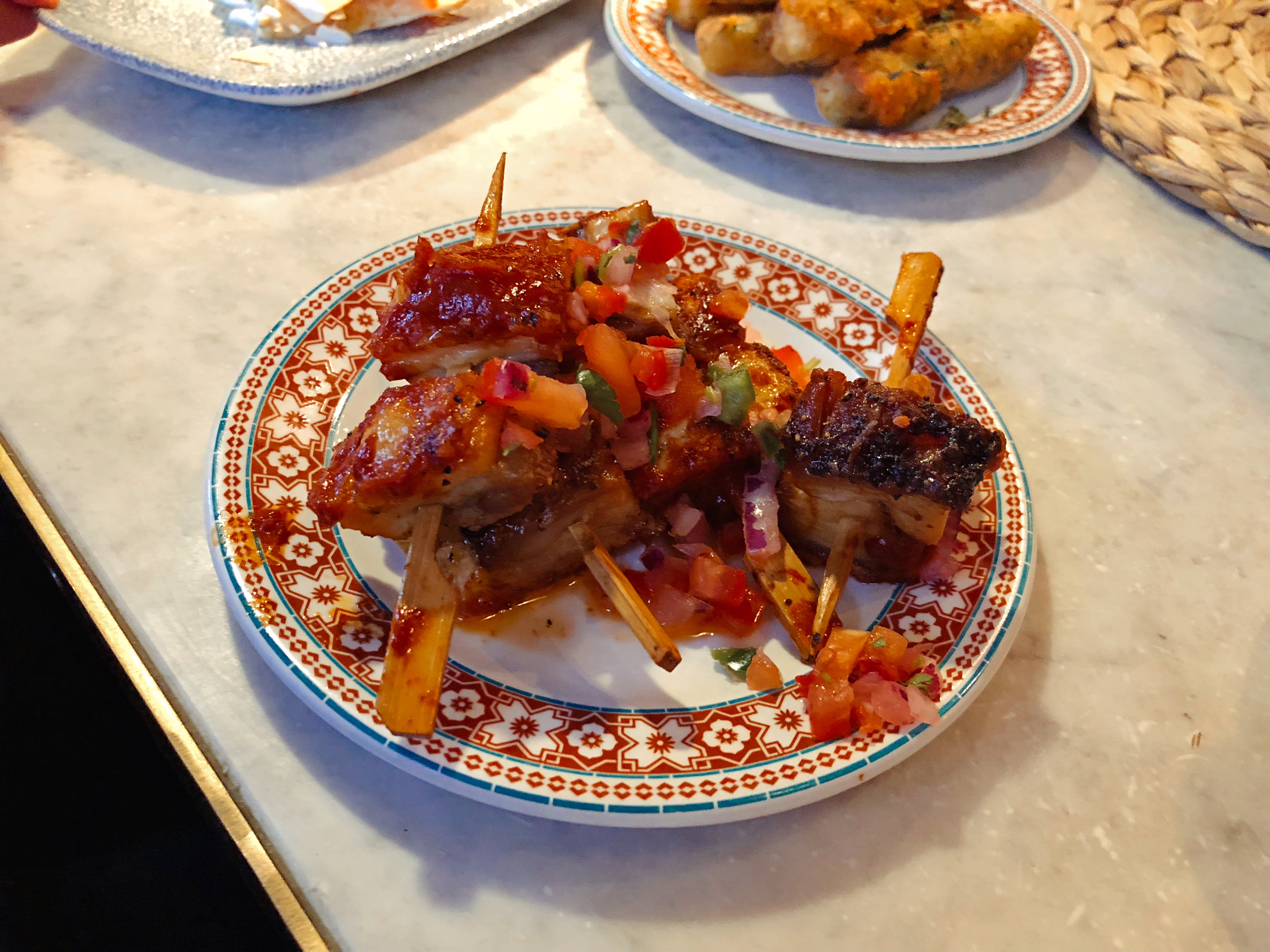
Better were the pork belly skewers, which were well cooked, all fat melted away and a crispy-crackling layer on top. I’m not sure I got the “signature spicy rum sauce” which had apparently been used, but I wasn’t complaining. These reminded me of the pork belly at The Real Greek, which is higher praise than it might sound.

I also enjoyed the jerk fried chicken, although that says more about my love of fried chicken than of Revolución de Cuba’s version. It was nicely seasoned, if a little too crunchy, and it didn’t need the rum mayo I didn’t dip it in. But even here it could have stood with being hotter, and although the texture was a long way from mechanically recovered meat, they didn’t feel like single pieces of coated chicken. Make of that what you will.

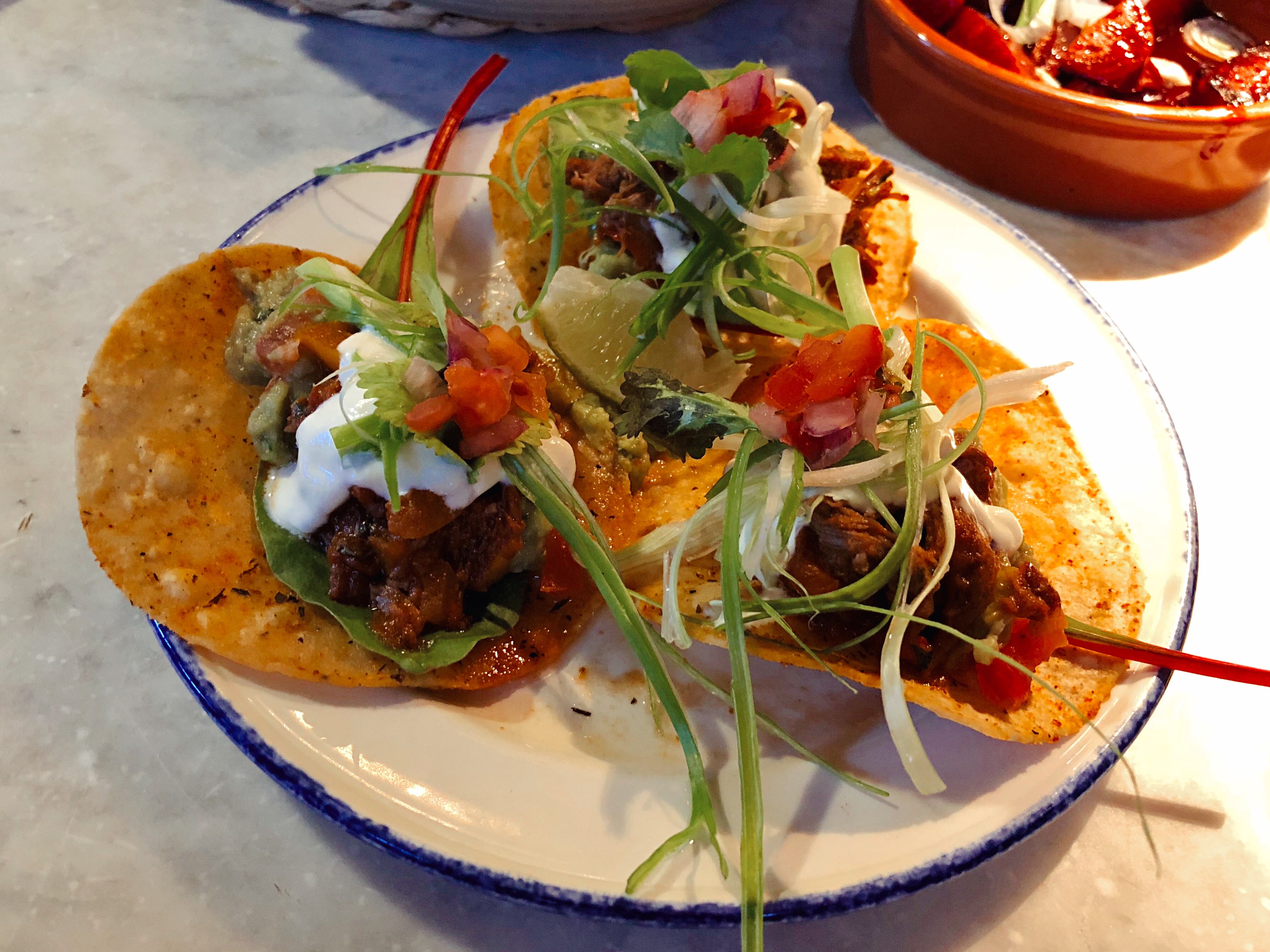
The more Latin American dishes we’d ordered were the ones that really fell flat. Chicken quesadillas might have been average if they’d been served hot but they arrived much closer to room temperature, wan anaemic things it was difficult to get excited about. We’d also ordered pulled beef tostadas, but the beef itself was claggy, bland and lukewarm. You didn’t get much of it before the dish gave way to the (cheaper) guacamole underneath and the tortilla shell, which pretty much made it the dish we’d started the meal with. The Cuban term for this beef is ropa vieja, which it turns out doesn’t translate as old rope: a shame, as it would have been apt.

Finally, we also had some crispy fried courgette. Well, two out of three anyway: it was indeed courgette but cut thick enough that getting it crispy was always going to be a challenge. I didn’t mind this, but even as I ate it I was aware of how many places do it better (especially Papa Gee). It was apparently served with Cuban gremolata, although barely enough to be noticeable, and if it had been fried in “Mojito batter” you really wouldn’t have known that either.

“This is a menu that reads much better than the food looks or tastes, isn’t it?” I said to Zoë as we surveyed the plates (mostly empty, although neither of us had shown much interest in the insipid chorizo).

“I’m afraid so. I’d come back for the guacamole, the chicken and the pork belly but that’s it.” I thought about it and tended to agree: three out of eight wasn’t exactly a stellar hit rate. I reflected on the other reviews I’d seen of Revolución de Cuba, so breathless, so enthusiastic, so positive. So comped, come to think of it. We decided to skip the churros (no doubt described somewhere on the internet as “yummy”) and asked for the bill. The whole lot – six tapas dishes, two sides, a pint and two beers – came to just under fifty pounds, not including tip. That’s not an expensive meal by most standards, but even at that price point your money would go much further in a many other places.

So far so meh, but I do have to say a word about the service. Georgina, who looked after us (and, seemingly, everyone else in Revolución de Cuba that night) was lovely – personable, polite and likeable. She came over halfway through – mid-mouthful, as wait staff always do – to check if our food was okay and we both muttered the usual pleasantries. But when she came with the bill she asked more than once, as if she actually wanted to know. So we told her. The food all came out at the same time because that’s how the kitchen did it, she said. We explained that it might be better not to and that some of the food had been cold as a result. She promised to feed that back, and I believe she did (every bit as much as I expect that feedback fell on deaf ears).

In conversation with Zoë, who tends to ask lots of questions, Georgina told us that she was studying for a Masters in criminology (a part-time job which involves looking out on Friar Street on a Friday and Saturday night probably forms part of her dissertation, come to think of it). It can be rare in chain restaurants to feel looked after rather than processed, and Revolución de Cuba would have got a lower mark if it wasn’t for the service. I wanted to tip her extra, just for enduring the canoodling couple from earlier on (“it was definitely heavy petting”, said Zoë later, “you’d get kicked out of a swimming pool for that”).

I never saw Revolución de Cuba as the kind of place I might eat on a Friday or Saturday night – I’m far too old and unfashionable for that – but I did hope it might be a serviceable small plates restaurant for a school night, or a spot of lunch on the weekend. Sadly, I think it doesn’t quite hit that level either. Some of the dishes are decent enough, but you can get them better elsewhere – Mission is better for tacos or burritos, The Real Greek better for small plates and Bhel Puri House better still. Whenever I ask what chain restaurant people would most like to see in Reading the response is overwhelming: people would love a Wahaca to open here. Based on my visit to Revolución de Cuba that gap in the market is still there. My own personal gap in the market also remains empty: if I want to feel like I’m in Andalusia, I’m going to have to get on a plane.

Revolución de Cuba – 6.6
138-141 Friar Street, RG1 1EX
0118 2077016
https://www.revoluciondecuba.com/bar/reading/