
Restaurant review: Ciao Bella, Bloomsbury

Family-run trattoria Ciao Bella is at the top of Lamb’s Conduit Street, not far from the British Museum. These days that street is about as affluent as they come, home to the original branch of restaurant Noble Rot and its offshoot wine shop Shrine To The Vine and to the likes of Honey & Co, La Fromagerie, Aesop, Sunspel and fancy umbrella sellers London Undercover.

It’s brimming with possibility. You can have a latte outside Knockbox Coffee in the sunshine, or sip a pint at the Perseverance, where acclaimed Nunhead pizza traders Dinner For One Hundred operate out of the kitchen. It truly is as likeable as street as you’ll find in the capital.

I’m guessing it wasn’t, though, back in 1983 when Ciao Bella first opened. Yet over forty years later it sits at the head of, but somehow separate from, all that gentrification. Because Ciao Bella is that rare thing, a restaurant beloved by those in the know but rarely talked about by everyone else. Ten years ago, back when Marina O’Loughlin was restaurant critic for the Guardian, she listed it as one of her 50 favourite U.K. restaurants.

“This 30 year old trouper packs ’em in night after night” she said and although – as so often with O’Loughlin – this approval had a touch of the performative about it, you couldn’t say she wasn’t consistent. Last year, writing in the FT about life post-retirement as a restaurant critic, under the headline At last, I can eat in places I actually like she said that she was still dining at Ciao Bella, and had recently lunched there three Fridays running. “Every visit is an event, a celebration” she is on record as saying.

It wasn’t just O’Loughlin, though. When Oisin Rogers, celebrity publican and Topjaw fanboy, published his list of his 55 favourite restaurants last year, surfing the wave of his post-Devonshire popularity, he also found room for Ciao Bella. He described it as the “quintessential family-run trattoria… full of jollity and chaos”.

The impression I got of Ciao Bella, doing my research, is that it will never trouble Michelin or the Good Food Guide but remains on many hospitality insiders’ shortlists. “If you don’t like it, you’re a snob” said one regular, interviewed by the now defunct London edition of Eater a few years ago. There was a similar comment in Harden’s: “anyone who doesn’t love Ciao Bella is mad”. Talk about a sure thing.

That’s not to say that all those rave reviews say that the food is brilliant – or, indeed, that any of them do. But they all suggest that it’s good enough, and that the overall experience of eating there is hugely more than the sum of its parts. They talk about the buzzy dining room, the legendary terrace with its blue canopies and its people-watching possibilities, the live pianist every night, the huge unpretentious portions, the seafood pasta decanted from a bag into your bowl tableside.

I’ve always understood that great restaurants are about so much more than the food – something Reading-based readers might recognise as the Dolce Vita effect – and, with that in mind, I would challenge you to read almost anything in the public domain about Ciao Bella and not at least slightly want to eat there. It all definitely had that effect on me. It had been on my to do list for a really long time, and on the last Saturday in September I zig-zagged up Lamb’s Conduit Street, window-shopping in the sunshine, on my way to a lunch reservation with my old friend Aileen.

The terrace always comes up in reviews of Ciao Bella and on a slightly warmer day I might have fancied eating outside, but I really liked the look of the dining room on the ground floor. It’s an unfussy space, its walls groaning with framed black and white pictures with a heavy reliance on the films of Fellini. There’s Marcello Mastroianni and Anita Ekberg, almost connecting in the Trevi Fountain in La Dolce Vita. Just along from that is a picture of the director’s wife, Giulietta Massina, in La Strada. It felt like the room in which all those stories I’d read – of long boozy lunches or chaotic evenings with accompaniment on the piano – took place.

So I was disappointed to be led to the sunshine-yellow basement, which was empty when I arrived, and plonked in the corner, at a table where my right elbow felt like it would be knocking against the wall for the entire meal. On my left I had a great view of the men’s toilets. The waiter conspiratorially told me it was a good seat because I could “see all the pretty girls coming in”, which I’m sure he meant in a vaguely twinkly way but which came across as on the borderline between cheesy and due for cancellation. Maybe I looked like an ornithologist, but I don’t think so.

Rooms benefit from people, it has to be said, and it was a better space by the end of our meal when every table was occupied. But it was still a slightly unlovely one, and I felt like I was in some kind of gastronomic overflow car park, in the room put aside for tourists. I’m used to having that experience in, say, Paris, but it was strange to have it happen in London.

In Ciao Bella’s defence, I think I’ve read somewhere that the basement is usually used for private parties but it seemed on that Saturday that the converse might have applied: when we left there was a wedding Routemaster parked outside on the pavement and I suspect a wedding was being celebrated on the ground floor. I can’t blame them for that: if they had the numbers to escape from the canary-coloured cellar they should have seized that opportunity with both hands. But away from daylight and ambience, I couldn’t help wondering what might have been.

By this point Aileen had arrived and we attacked a very serviceable, almost medicinal, negroni apiece. It was, after all, negroni week – or, to give it its full name, ‘Instagram bores going on about negroni week’. Ciao Bella’s was bang on, no whistles or bells, no flourishes, just a route one approach to dropping that soft, orange filter over the rest of the day. I liked it a great deal.

As we tried without success to get round to the menu, Aileen filled me in on what she’d been up to, which included commencing a grand project with a friend to do twenty-six city breaks over the next ten years or so, proceeding in reverse alphabetical order. Never let it be said that Aileen hadn’t found ways to fill her retirement, not that she sounded very retired from all the side hustles she had taken on since leaving her main job. I learned that Zagreb – where else would it have started? – was very nice, although the cathedral isn’t quite finished yet following the earthquake.

I also discovered that Aileen planned to go back there when it was completed, so I tried pointing out that repeat visits would just make her project almost impossible to finish. Apparently it’s Ypres next, but do pop any suggestions for other destinations in the comments. I’m sure Aileen will read them. X will be particularly challenging, I’m guessing: my suggestion was that she could just about stretch it to Aix en Provence on a technicality. Do you think that’s cheating?

Ciao Bella’s menu, on a single outsized sheet of card, was as pleasingly retro as its website. Its contents were, too: this felt like the menu at every neighbourhood Italian since time immemorial, a proper, old-school selection of dishes. It took me back to places from my past – Pepe Sale circa 2009, or my dad’s erstwhile favourite Sasso in Kingsclere. It reminded me, too, that this kind of spot isn’t seen as frequently as it once was: a quote in that Eater article, tellingly, said “what’s nice about Ciao Bella is that it’s still there. One by one, other restaurants like it have been shut down”.

What that meant in practice was that starters were between £6 and £16, pizzas about £15 if you wanted one and pasta priced all over the place, although you could have a smaller portion of pasta for about £12. It meant that mains were between £20 and £30, a price point that used to mean fancy and now just means ‘get used to it’. It meant mozzarella in breadcrumbs, and Parma ham with melon, aubergine parmigiana, veal with lemon sauce or fried scampi. It meant that the modern affectations of Italian food were largely unnoticed by Ciao Bella: burrata appeared on one pizza, ‘nduja on one starter, neither anywhere else.

There was also a small specials menu, and even that made me feel nostalgic for those evenings at Pepe Sale, a lifetime ago, when Marco would materialise at your table and talk you through the options that evening. By this point, however underwhelming that yellow room was, I was disposed to like Ciao Bella a lot. It seemed to be transmitting from a time when life was very much more straightforward, and disappointment less abundant. I guess this must be the dragon Reform voters spend their whole lives unsuccessfully chasing.

But we were in 2025, where disappointment is rarely far away, and it came quickly in the shape of Aileen’s starter. Breadcrumbed mushrooms stuffed with spinach and ricotta weren’t the kind of thing I’d order, mainly because they always felt like a dish you could pick up in the chiller cabinet at M&S, or Iceland for that matter. They came sauceless and strangely burnt in places, plonked on a plate with a lemon wedge in the middle and pointless distraction from the dregs of a bag of Florette, in a presentation that screamed from the rooftops will this do?

“Taste this” said Aileen, in a manner that was a long way from oh my goodness, you have to try this. “It’s sort of wet: it makes me think it’s been frozen.”

I wasn’t sure about that, but it was middling in the extreme, if such a thing is possible. The filling was watery and bland, the layer of mushroom itself very thin.

“And it’s dry, it needs something else – a sauce, or a dip, or something. How does it manage to be wet and dry at the same time?” Aileen wondered out loud. “And what’s the point of those bits of undressed salad?”

So many questions, and so few answers. The late Shirley Conran famously once said that life was too short to stuff a mushroom: I suspect she might have thought it was too short to eat these, too. This cost £11. I was about to say something pithy about that, but putting the price there on the page, unembellished, makes the point.

I fared better, but better’s a relative term. Pappardelle with lamb ragu was on the specials menu and it was good but far from special. The thick ribbons of pasta were decent enough, but cooked past al dente until they were more slump than spring, and the lamb in the ragu battled against an overly sharp note of tomato, as if everything hadn’t had enough time to form a lasting relationship. The diced carrots were too substantial, too, standing out where they should have blended in, a long way from sofrito.

Better really is a relative term, and I couldn’t help looking at this dish in other relative terms, too. If I’d been served this at, say, Tilehurst’s Vesuvio I might have been pleasantly surprised. Something this good at Cozze would have been a miracle. But on Lamb’s Conduit Street, in a restaurant older than my wife that’s lauded by food insiders far and wide? It just felt ordinary.

Everything was a little rushed, too – I know I complain about this fairly often, sometimes at length, but the pacing here felt like the restaurant was trying to get ahead of a rush they knew was coming; perhaps it was another impact of having a wedding celebration upstairs. But it meant that our starters must have come out ten minutes or so after we picked them, when we were barely into our negronis, and that meant that a leisurely lunch, the kind so mythologised at Ciao Bella, was out of the window.

So we downgraded our expectations and picked a half bottle of Aglianico from the wine list. To be fair to Ciao Bella it was perfectly pleasant and far from poor value at £15, and I was delighted to see a few half bottles on the menu. Maybe they are to cater for the kind of lunch we turned out to be having. Our mains turned up about fifteen minutes after the starter plates were taken away, if that. Aileen expressed audible surprise that they were so quick, too taken aback to be completely English about it.

I had chosen an old favourite, and something I rarely see on menus, veal saltimbocca. In keeping with the whole nostalgic theme, I suppose, because back when Dolce Vita was at the height of its powers, something like ten years ago, I could have eaten this dish every Friday night for the rest of my life. Some months, to be honest, it felt like I did.

This did just enough to transport me, if only momentarily. That veal, slight and tender, wrapped in Parma ham and served with that sauce singing with white wine triggered plenty of happy memories. And if there wasn’t quite enough sage perhaps it didn’t matter, just like perhaps it didn’t matter that the accompaniment was five little cubes of potato, some veg which probably didn’t come out of a tin but somehow felt like it had and yet more of that bloody bag of Florette. For a moment, I felt like maybe Ciao Bella had worked its magic at last, and none of that mattered.

But sadly, there was one thing that did matter, and Aileen summed it up when describing her main.

“It’s such a shame this isn’t hot.”

She was absolutely right. It felt like the worst of both worlds, really: if your dish is going to emerge from the kitchen in record time you might complain about being turned but at least your meal should be piping hot. But for it to turn up so quickly and be lukewarm? It just felt like adding insult to injury, as if they’d cooked it at the same time as the starters and then just left it lying around on the pass until the earliest possible moment when it could be carted to the table.

Otherwise Aileen would have been absolutely delighted with her gamberoni, I imagine: plump prawns swimming in a sauce which looked almost identical to the one that came with my saltimbocca but which was clearly chock-a-block with garlic. But what was identical were those five cubes of spud, that mixed veg by numbers, that pointless, perfunctory scattering of salad from a bag. What was identical was that feeling of expecting more.

My dish cost £19.50, Aileen’s was £22.50. Neither was so expensive as to leave you feeling like you’d been mugged, but even so that word, ordinary, hovered in the air again.

Also distinctly ordinary were the courgette fritti, which were very thick batons which left your fingers shining with oil. I’ve had some gorgeous versions of this dish over the years – at Town, or at Battersea’s downright terrific Antica Osteria Bologna. The more I think about it, the more I think that everything I’ve heard about Ciao Bella and how magnificent it is emphatically applies to Antica Osteria Bologna. That is the restaurant people say Ciao Bella is. Ciao Bella, I’m afraid, is not.

We’d partly ordered a half bottle of red because we didn’t see ourselves staying the course at Ciao Bella but the dessert menu came along, and our wine was nearly finished, so we thought that we may as well give the restaurant one last chance to turn things around. It was, ironically, the area where I found Ciao Bella strongest, although the dessert menu does essentially say that only three of the desserts are homemade: possibly their most famous dessert, lemon sorbet served inside an actual lemon, is apparently not.

We ordered two of the three homemade desserts and I would say they were the – best? least disappointing? most acceptable? – things that we ate. My tiramisu wasn’t going to win any awards but it was a classic example of this dish – a thick wodge buried in cocoa, deeply boozy savoiardi biscuits and mascarpone in distinctly agreeable harmony. If everything else had been at the standard of this, I’d have liked the place far more. Still, better to finish on a high I suppose than begin brightly and plummet from there.

Similarly Aileen’s panna cotta, served in the shape of an old-school jelly mould, had a satisfying wobble and was crowned with a nicely done fruit couli. The dessert menu blurb is far too literal where the panna cotta is concerned – not sure “popular creamy white dessert made with sugar, gelatine and vanilla” is really selling it to anybody – but thankfully Ciao Bella is better at making panna cotta than it is at describing it.

The whole dessert experience rather summed Ciao Bella up. At £8.50 and £7.50 apiece these dishes weren’t expensive. But they arrived about five minutes after we ordered them, which is plain silly. I was catching up with a very good friend I hadn’t seen in a year, we’d been chatting so much that it took ages for us to place our order. Absolutely nothing about us, as a table, said “we’re in a hurry”.

It was nice of our waiter – who I do have to say was charming, in that very well-practiced way you might expect of an old stager – to ask if we wanted coffee, but by then we were ready to cough up and seek out somewhere else for the rest of our afternoon. Our bill came to just under £140, including an 11% optional service charge (this very specific uplift, deliberately picked to fall between the traditional 10% and the more common 12.5%, seemed strange). It was hard to feel happy with it or angry with it. It was what it was, as the meal was what it was.

Sitting outside Noble Rot, across the way, afterwards with a very nice bottle of red, making the most of the fact that it was still warm enough to do so, we agreed that the meal at Ciao Bella had been a tricky one. Even though both of us felt our meal could have been far better we didn’t feel aggrieved in the way that we might have done.

I’ve thought and thought about it since, and I’m still not sure entirely why. Of course, I had a lovely lunch with a very precious friend, and we both agreed that it could have happened anywhere and we would have had an excellent time. So there is that, but I can’t give a good rating every time I have lunch with Aileen just because I’m having lunch with Aileen: my credibility can do without that kind of dent.

So what was it? Did some of Ciao Bella’s magic transfer to us, by osmosis from the better, buzzier room upstairs, or slip through the cracks in the ceiling? I really don’t know. Objectively Ciao Bella was deeply average. If you had an Italian restaurant like it in your neighbourhood you might go, and you might go often enough to become a regular. You might form the kind of relationship with it where you overlook off days and look forward to seeing your favourite waiters or ordering your favourite dish.

But it is, as others have said, the kind of restaurant that is slowly dying out in the U.K., replaced by pizza places that only do pizza, pasta places that only do pasta and the abomination that is mid-price casual dining trying to devalue Italian food with all its horrendous Zizzis, Prezzos and Bella Italias. Maybe I just felt a little warm echo of some of the restaurants I’ve loved over the years that are no longer with us, and maybe some of that goodwill reflected on Ciao Bella, although it might not have deserved it.

Yet although it wasn’t my cup of tea, I can imagine it might hold that place in the affections of others, and I do envy them, both what they have and what I’ve lost. It’s funny, sometimes I can read reviews of restaurants in places I will never go, enjoy the writing, know I’ll never go there and feel that reading the review was enough, that it was as close to dining in that restaurant as I need to get. I sort of hope, on some level, that this review serves that purpose for you, even if the meal wasn’t entirely for me.

So if you’re the sentimental sort, you’re in London a lot, and you want to do your bit to prop up an institution, one of the last of its kind, if you’re prepared to overlook some bad tables, some middling dishes and some lukewarm food you might find, after you’ve invested enough time and money, that Ciao Bella is a restaurant you can truly fall in love with. For the rest of us, it might be better just to know that this place exists for its people, that there are places like that out there for everybody, and that in time we will all find ours.

Ciao Bella – 6.4
86-90 Lamb’s Conduit St, London, WC1N 3LZ
020 72422119

https://ciaobellarestaurant.co.uk

Since January 2025, Edible Reading is partly supported by subscribers – click here if you want to read more about that, or click below to subscribe. By doing so you enable me to carry on doing what I do, and you also get access to subscriber only content. Whether you’re a subscriber or not, thanks for reading.
Pub review: The Chester Arms, Oxford

The concept of choice in restaurants, I’ve always thought, brings out the inner Goldilocks. Too wide a menu and paralysis sets in, but if it’s too narrow you can’t help feeling straitjacketed. It’s why restaurants that only offer one or two dishes: Le Relais de Venise with its entrecôte, or Burger & Lobster with its – well, you know – have never really caught on here.

I’m reminded of the immortal words of Peter Butterworth in Carry On Abroad, an evergreen favourite of mine, when his Spanish waiter Pepe comes out with the immortal words “of course you are having choices! You can having sausage and chippings, sausage and beans or beans and chippings. That’s choices”. And believe me, I don’t think anybody would have enjoyed dining at the Palace Hotel in Elsbels.

The only time we omnivores really think it’s acceptable to restrict our choices is when we go to a restaurant that offers variations on a theme: burger restaurants, pizza parlours, Nando’s. And yes, Nando’s does technically serve stuff that isn’t chicken but that’s hardly the point, because nobody goes there for that. If somebody at a table at Nando’s is eating a halloumi burger, you can be very confident that they don’t eat chicken and have been dragged there by some inconsiderate sod who does.

Then, of course, there’s the other occasion when we feel as if we have no choice: because there’s something on the menu that we must have, or always order. But those things, as I discovered when I counted down Reading’s top 50 dishes a couple of years ago, are hugely subjective. My wife might be unable to visit Kungfu Kitchen without ordering their deep fried fish, and believe me she is, but other people would mount an equally passionate case for the sweet and sour aubergine, or the lamb with cumin.

Besides, the better the restaurant – like KFK, or Clay’s – the less likely it is, really, that there’s a single must-order dish. What are the chances that a kitchen so skilful would produce just the one thing everybody has to eat? Pretty slim, if you ask me.

No, generally the concept that a restaurant has something you must try, a legendary dish in the making, is another by-product of hype, and usually comes out of the mouths of critics when they visit somewhere, soon after it opens. I’ve tried Brutto’s coccoli, Town’s saffron risotto and Kolae’s fried prawn heads, all acclaimed as instant classics when those venues opened, and they varied from quite nice to very good. Were any of them dishes those restaurants should be exclusively associated with? Not really. Two of them weren’t even the best thing I had in those meals, but it shifts newspapers to rave.

So no, restaurants that become synonymous with a single dish are rare in general, and I don’t think Reading has any to speak of. But that makes the subject of this week’s review even more unusual, because it does occupy that very niche territory. The Chester Arms is an Oxford pub just off the Iffley Road, east from Magdalen Bridge but a smidge closer to it than the Magdalen Arms. It has been under its current management for over ten years. And it’s very much famous for one thing in particular, its steak platter.

Now, it feels wrong to me for most restaurants to describe their own dishes as famous. I still remember the overblown, unsubstantiated hype for The Botanist’s hanging kebabs, for instance, which were more hanging than famous. It’s a bit like restaurants keeping a certificate in their window from over ten years ago, or restaurant bloggers describing themselves as ‘multi award-winning’ when they have, in fact, won none. Famous is something other people are meant to say about you, not how you describe yourself.

And yet in the Chester Arms’ case, you might make an exception. The pub’s homepage describes them as “home of the famous steak platter” and the dish has its own page on their website. It’s the creation of head chef Hamzah Taynaz – although Companies House makes it seem like he might have parted company with the pub over the summer – and it looks like a doozie: onglet cooked rare or medium rare, chips, béarnaise, cabbage with bacon, dressed salad. £50 for two people, or £70 for three, which on paper at least is impressive value; it was £30 and £45 back in 2015, but it’s been a bruising decade.

The thing, though, is this: I have been told to visit the Chester Arms numerous times, by people I know and by people who’ve tipped me off online. It’s been the place at the top of my Oxford to do list for quite a while – I would have reviewed it last month were it not for a medical misadventure – and every single person who has told me to go there has mentioned the steak platter. Some of them had eaten it, and raved about it. Others hadn’t, but left me in no doubt that if they did go there it’s exactly what they would order.

In fact, when I went to Arbequina last month I happened to be on the same train as someone I follow on Instagram, and when I messaged her to ask where she’d eaten in the city I was unsurprised to find that she had gone to the Chester Arms. “We had a great meal there” was her verdict. “It lived up to the hype for us.” So finally, last weekend, I got my chance to try it for size.

My plus one for this meal was my old friend and Oxford compadre Dave, and as we had a pre-lunch latte in Peloton Espresso’s very agreeable back garden I told him that this meal made him, with the exception of Zoë, my most capped plus one. Not bad going for a man who valiantly resisted joining me on duty until a couple of years ago, I told him.

“I thought you’d expect me to have opinions about everything!” he laughed. “And I’m too easy-going for that, I just want to eat nice food. But then I realised that actually you aren’t fussed about all that, so now I don’t mind tagging along.”

Dave was, I had to concede, probably correct. He likes to make much of how low maintenance he is, by which he means that he’ll generally do whatever you like and doesn’t have strong preferences. In the past I may have found that a tad frustrating, but as a dining companion for a restaurant reviewer, it turns out, it’s pretty much a dream CV. Besides, Dave quite rightly pointed out that for our forthcoming holiday to Bruges I had insisted on the dates, insisted on a hotel, changed my mind and picked another hotel and so on and so on, so maybe I quite liked having a low maintenance friend after all.

The Chester Arms is another of those lovely backstreet boozers I didn’t even know existed and like the Star off Cowley Road, it reminded me a little of Reading’s Nag’s Head and the Retreat, only built to a different scale. It was a big, handsome corner plot with a decent-sized garden and inside it was a very attractive room with wooden floorboards, large sturdy tables ringed by fetching booths and plenty of natural light. It was a properly gorgeous space which made me think, as so often, that I really missed the Lyndhurst.

Having said that, I do have to say that some of its tables were more equal than others. The place was absolutely packed – you have to book quite far in advance if you want a table – and without much in the way of soft furnishings, which made it a cacophonous place to be. The two tables nearest to us were the handsome ones for larger groups but our little table with unforgiving chairs, near the kitchen, next to a stack of high chairs, felt like one they put in the seating plan because they could, not because they should.

In fairness the table directly in front of me was possibly even worse. The large group settled in nearby was full of people who were young, exuberant and happy to be there. I love Dave dearly, but we could only manage one of those three. “They’re probably all catching up at the end of their summer holidays, ready for term to begin” he said equably, and I felt even older than usual.

The Chester Arms’ menu was compact in the way you’d expect when most people are there for the feature attraction: a handful of nibbles, only three starters to speak of and three main courses which were not the steak platter. One of them was a vegetarian mezze selection (“perfect as a starter to share, or to be enjoyed as a main for one”) which had, by the looks of it, strong Nando’s halloumi burger energy. The starters were under a tenner, all mains save the steak platter hovered around twenty pounds.

Now, to get this out of the way from the off, our service was brilliant from beginning to end. Our server was young, American, properly charming and looked after we two avuncular has-beens perfectly, and I can’t say enough good things about her. With one exception, which is that I saw a blackboard with specials being shown to other tables later in the afternoon but we were never told about it or given a chance to look at it. In an ideal world it just said, in big cursive script, Stop fooling yourself, we all know you’re having the steak platter but, as I didn’t see it, I can only guess.

Dave was reluctant to have a starter in case the steak platter turned out to be too much, which did make me wonder if some kind of Invasion Of The Body Snatchers situation was going on, but I managed to persuade him to share the most appealing starter with me. Actually it might have been the absolute best thing I ate all afternoon, so I half wished I’d just pressed on without him. Lamb koftas were a trio of plump nubbins, beautifully coarse and with just the faintest whiff of offal to them, really gorgeous stuff.

They came with flatbreads which felt bought in, but which were good nonetheless, a small stack of guindilla and what was described as green tahini. I’m not really sure what that was, because tahini is a paste with a very distinctive taste and texture and this was none of those things, and it didn’t have a particularly strong note of sesame, but I quite liked it anyway. Dave was unconvinced by it, but won over by the koftas. He let me have the spare one, because he’s a good egg, and even though they were almost more faggot than kofta it did make me wonder what a Chester Arms mixed grill would be like. That had better not have been on the specials menu.

We had a while to catch up after that because each steak is cooked to order and takes, if the menu is to be believed, 45 minutes. So he sipped his pint of alcohol free Rothaus, and I had a pale from DEYA: we were both keeping our powder dry for a more substantial session post lunch. I didn’t know at the time – I learned this from Instagram after the fact – that landlady Becca Webb had just come back from a tasting tour in Bilbao with her wine suppliers, and if I had I might have paid closer attention to the wine list. Next time.

Anyway, Dave and I had a good old chinwag, if constantly drowned out by the relentless, unforgivable youngness of people at our neighbouring tables, as we struggled gamely with the heat from the nearby kitchen. The problem with a restaurant where everybody orders the same thing is that each time it comes out from the kitchen you perk up, think it’s yours and then realise it’s going to another table. But in a way it’s genius, because it raises your anticipation over and over again, and every passing platter looked amazing.

Besides, it distracted me from Dave giving me a litany of people he knew, roughly our age, who were either seriously or terminally ill. They don’t call your fifties ‘sniper’s valley’ for nothing, and after I’d heard about three of them my fight or flight health anxiety kicked in and I asked him, ever so nicely, to stop. Is this what we’ve got to look forward to? I wondered to myself.

I can’t imagine anybody’s life expectancy would be enhanced by what turned up at our table about half an hour after our starters, but just look at it. You’d shave a few days off the end of your life for one of these, wouldn’t you?

It’s difficult to give any kind of scale with a photograph like that but trust me, that serving plate was substantial. Our two serving plates were on the smaller side, but that just gave you an excuse to go back again and again: not for nothing did the pot of utensils on our table include forks, sharp knives and a little set of steak tongs.

Everything about this dish was bang on or thereabouts. The onglet was cooked beautifully medium rare and, in the main was buttery and absurdly easy to cut, any tension in the fibres expertly soothed away; I appreciated the irony of eating something that was better rested, most likely, than I will ever be. The béarnaise was ever so slightly thin with a slight hit of vinegar, but it hadn’t split and went very well with the steak; I might have liked a little more, between two, and a spoon to dish it up with but as quibbles go those were minor.

The other thing I loved, though, was how complete a dish this was and how every component brought something to the table. The heap of savoy cabbage shot through with lardons was truly joyous, the chips were thick, crunchy and surprisingly good. And even the salad, which I’d dismissed in the run-up as a makeweight, was not an afterthought. It was properly dressed, and it supplied the lightness and acidity that would otherwise have been missing from the platter.

Our server had asked us if we wanted to upgrade to the platter for three (“nice bit of upselling”, said Dave) but we’d decided not to, mostly because I thought if I was reviewing the place you’d want to know if a platter for two actually served two. And my verdict is that it does: we finished all our steak and most of everything else, and even in the time between finishing and our almost empty plates being taken away we were both picking with forks – dunking a chip in the béarnaise or trawling it through the juices from the onglet, or the good stuff that was left after you’d airlifted the cabbage away. If service had been less on it, I think our plate would have ended up clean as a whistle.

I tried to send a picture of the platter to Zoë – because she’d asked, even though I imagine it would have made her seethe with resentment – and failed, because the mobile signal in that part of Oxford is like taking a day trip to 1997. Perhaps it was for the best.

Our server asked if we fancied dessert, so I asked Dave if he fancied dessert – because I’d have looked like a right fat bastard scoffing one on my own – and I was hugely relieved when he decided to join me. Perhaps the bodysnatchers hadn’t troubled his house in Wootton Bassett after all. The dessert menu was also compact: three desserts, or ice cream with Pedro Ximenez, or a selection of ice creams, or an affogato.

Another thing to like very much about the Chester Arms was the very appealing selection of digestifs, and the options of red or white port, Sauternes or PX: I had another half of the pale instead, but on another day would have veered in the direction of something smaller and sweeter. The pale, by the way, was decent if piney: not DEYA’s iconic Steady Rolling Man but a reasonable stand-in. I’d have checked it in on Untappd, but I was in 1997 so it hadn’t been invented yet.

I was tempted by something ice cream based, but the server couldn’t tell me where the Chester Arms’ ice cream came from and I wasn’t invested or entitled enough to make her ask. So instead I went for my tried and tested choice, a tiramisu. It was about as different as possible from most of the ones I’ve had recently – not loose, airy and boozy like the tiramisu at, say, Paesinos or RAGÙ. It was more old school, by which I suppose I mean inauthentic: much firmer, much denser, crammed into that Duralex glass like they’d almost forgotten to say when.

And it was gorgeous. I’d forgotten that authentic is overrated, with all the honest-to-goodness Italian food cropping up in places like Reading and Bristol, but this was a delight from first spoon to last – far, far more cream than sponge but laced with Courvoisier and Frangelico. I loved it far more than I expected to, and it made me think again that the Chester Arms might be famous for its steak platter but it had made the canny choice of ensuring that none of the other items on the menu were an also-ran.

Dave had the crème brûlée, which is just one of those dishes I never personally order. I tried a spoonful of it and it, too, was right on the money: just enough warmth, the carapace just the right thickness, the cream vanilla-speckled and exemplary.

We didn’t tarry, because by that point it was incredibly warm and both of us fancied stretching our legs. Besides, I had promised to introduce Dave to the Star and his beloved Liverpool had finished playing, so the lack of mobile reception was no longer the positive nuisance it had been. My advice is that if you’re going to spend time somewhere with absolutely no phone signal, the best idea is to do it in the company of someone where you can talk for hours without feeling the need to check your phone. So that’s exactly what I did.

Our meal for two – two and a half courses each, one of them that steak platter, and a pint apiece came to just under £100, including a discretionary 12.5% service charge which was totally earned. When you think that half of that whole bill was down to a single dish that the pub endearingly describes as a “small steak”, you have to hand it to them.

I’m really glad I finally made it to the Chester Arms – partly because it’s been an ambition for such a long time and partly because it was fascinating to try a restaurant in this country which really is synonymous with the one dish, to see if that reputation is justified. And it absolutely is – if you like steak at all, you would have a ball hopping on a train to Oxford and making your way to the Chester Arms. And if you don’t, but you know someone who does, make sure the two of you take a friend with you: you can have the fish and chips and they can have the time of their lives.

I do find myself wondering though, still: what was on that specials board? But I know that it could have had skate wing on it, or fried chicken, or countless other things, and I still would have ordered the steak platter. So does the steak platter qualify as famous? Yes, I think it probably does.

But if I went back to the Chester Arms again, knowing what their kitchen is capable of, would I really still order the steak platter a second time? Also yes. I’d be even sadder, though, if they’d taken those lamb koftas off the menu, because it was the dish I’d want to order every time, if it was up to me. That’s choices.

The Chester Arms – 8.4
19 Chester St, Oxford, OX4 1SN
01865 790438

https://chesterarmsoxford.co.uk

Since January 2025, Edible Reading is partly supported by subscribers – click here if you want to read more about that, or click below to subscribe. By doing so you enable me to carry on doing what I do, and you also get access to subscriber only content. Whether you’re a subscriber or not, thanks for reading.
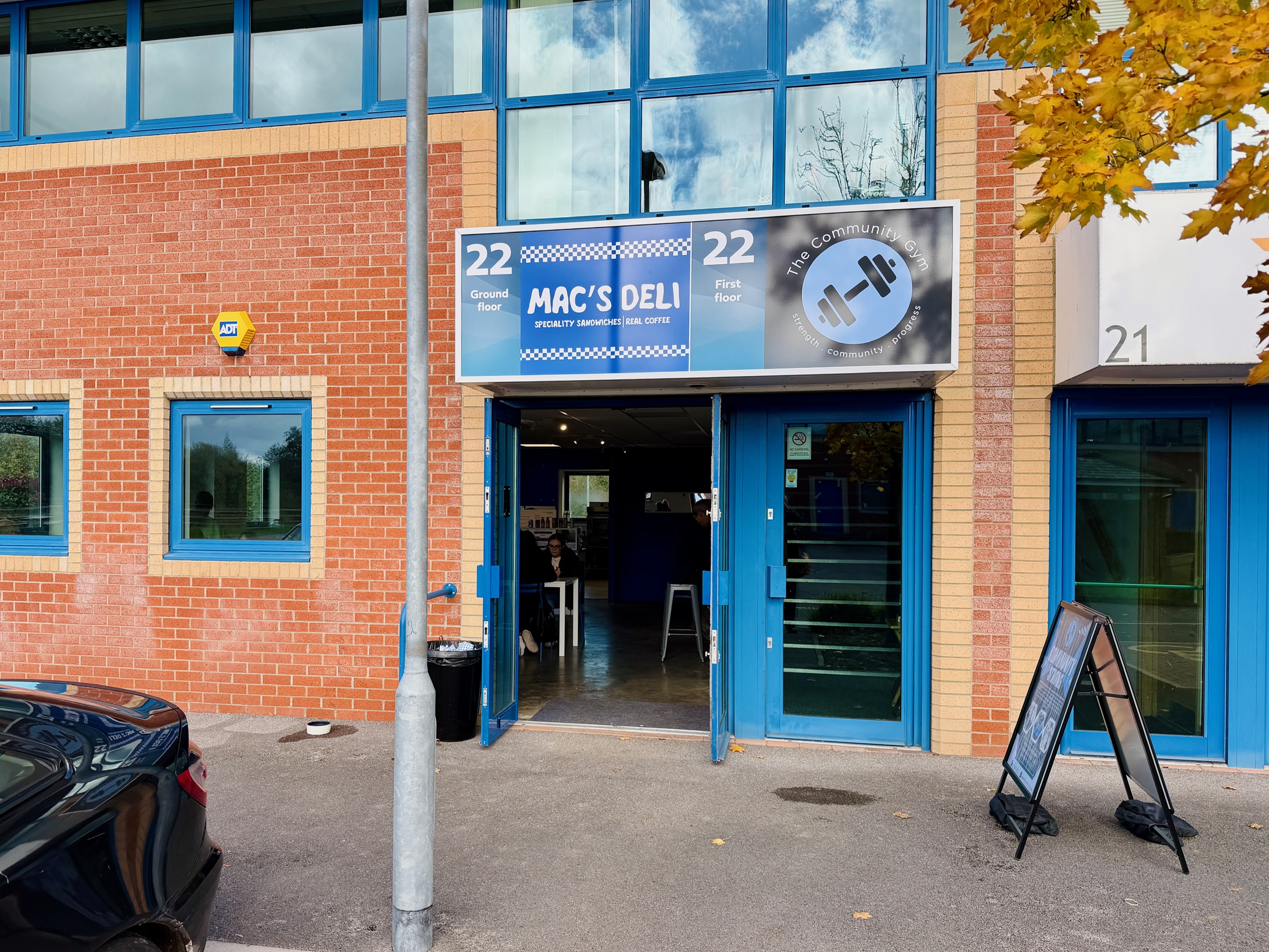
Café review: Notes Coffee

Zoë and I were in town the Monday before our holiday, we’d finished all our errands and there was time to fit in lunch somewhere before taking the bus home to face the mountain of ironing and packing. Zoë wanted to go to Shed, which I could completely understand, and then it occurred to me – we could try out Notes, the first of the raft of hospitality businesses we’ve been promised on Station Hill, and I could get a review of it under my belt.

Zoë has been disappointed by shiny new things in Reading quite enough times, especially recently, and I suspect she had a Tuna Turner on her mind, and she was stubbornly refusing to budge. So I offered to buy her lunch, and that’s what sealed the deal.

Subscribe to continue reading

Become a paid subscriber to get access to the rest of this post and other exclusive content.

Café review: Mon Chéri Café & Bakery

For childfree people like me, the tail end of August is possibly when you most keenly feel the disconnect between you and the rest of the world. At work everyone’s back from their holidays, preparing for the beginning of the academic year, already mourning their week or fortnight on a sunbed, by a pool or in a villa. My Instagram has been full of holidaymakers squeezing the last few drops out of the month. They have got excited, packed and prepared, touched down, drunk cold beers or glasses of rosé, topped up their tans, raced through some novels. And now they’re all coming back, like migrating birds, refreshed but, most likely, a little sad.

I’ve watched everybody embark and return, seen the Instagram posts and stories, and told myself each time that my time will eventually come. And it will, soon, but not quite yet: by the time you read this I will be hours away from setting my out of office and closing the laptop, but as I write this I’m running on fumes. The rhetoric at work will all be about how everybody is full of beans and ready to go, to close out the year: I am depleted, and ready to go to the airport. Our timelines won’t synchronise until I return, when we all prepare to put the clocks back, put the central heating back on, contemplate the end of the year.

Anyway, the last day of August found me with a day on my tod, feeling a little melancholy and looking for some feeling of escape. So I decided to make my way to Mon Chéri, the Greek café on West Street, to see some Hellenic sunshine might illuminate my mood. It opened at the end of last year, I think, and has been on my list ever since, but it’s taken a little while to reach the top of it.

And when I say Mon Chéri is open, I mean that it’s very open indeed: if Google is to be believed, they start trading at 6am every day, not closing until 8 in the evening. When I commute to work, my bus trundles down West Street around half-seven. Mon Chéri is always open by then, awning out, with some customers in already. Is any hospitality business in Reading open quite that long, with the exception of Gregg’s and Wetherspoons?

So. yes, I partly picked Mon Chéri this week because I’m so very ready for a holiday and, for me, Greece is the place I most powerfully associate with holidays, even now. The first time I ever left this country I was thirteen years old and my parents, heady with the rush of having remortgaged our suburban semi-detached, took us to Corfu to share a villa with some friends. I had never been on a plane, never known sunshine like it, was fascinated by the way Greek lemonade tasted different, couldn’t get enough of the music of the cicadas – when I could tear myself away from a book or my chess set, that is.

Early on in our stay we found a taverna, run by a chap called Tassos, and it was love at first sight. The food took forever to arrive, but nobody cared because we were sitting outside, on those balmy evenings, and my parents had access to a steady supply of Retsina. Tassos had an ancient stereo that played Greek music, but it was on the blink so it was always randomly speeding up or slowing down, some kind of weird bouzouki remix. The overall effect was of an establishment inches from collapse.

Sometimes customers at a neighbouring table would be so angry about the interminable wait that a blazing row would ensue. My parents’ friends Carol and Frank wanted the earth to open up and swallow them; my dad found it hilarious. We went every night, and by the end we were such regulars that after other customers complained, as they often did, Tassos would come to our table and say something to the effect of What was their problem?

As a trip, it had a lasting effect on me. It was the only time I remember my family going out for dinner more than once a year, and I think it made me fall in love with food and restaurants. Specifically, it made me love Greek food. My dad was keen that we enjoy ourselves but not go financially mad, so we were limited to the least expensive things on the menu, the souvlaki, the sofrito – veal in garlic – and the stifado. And I became addicted to the last of those, the rich stew of beef braised to surrender with tomatoes and soft, whole shallots. I can’t remember if it was Tassos’ wife or mother in the kitchen – or even his grandma – but whoever it was, the chef was a genius.

Since then I’ve been to Greece many times. I’ve done Rhodes, which I liked even more than Corfu, although I’ve only once managed to stay in Lindos, the bit of it I adored the most, once. I went to Kefalonia just after the Captain Corelli film, and had dinner with a pre-fame Simon Pegg, sporting a Beckhamesque mohawk, at the next table. I’ve stayed in Mykonos, which I loved despite a nagging feeling that I didn’t see the best of it. I’ve holidayed in beautiful, scruffy Athens, walking among the city’s ruins just before my first marriage went the same way.

And then there’s my very favourite part of Greece – Parga, just around the coast from Preveza airport, a beautiful harbour town full of winding lanes where you can completely forget about the world, sit in one of the many tavernas, eat fresh fish and drink sweet rosé and, for a little while at least, become a twenty-first century lotus eater. One one holiday there I took a boat trip to Corfu Town, strolled the Napoleonic esplanade of the Liston, felt the whole thing coming full circle.

All that said, I’ve not been to Greece in nearly a decade. At first it was Covid’s fault – my trip to Lindos, booked in hopeful ignorance at the start of 2020, was shifted back again and again until we accepted, reluctantly, that it just wouldn’t happen. But the world has gone back to normal since then, something has stopped me returning and I’m not sure what it is.

Analysis paralysis, possibly: I am never able to pick the island, pick the resort, pick the accommodation. I see everyone else going there and I envy their certitude but that magic combination of the right airport, the right flights, the right place to stay has never jumped out at me. I’ve contemplated Chania, or Agios Nikolaos, or going back to Parga, but I’ve always chickened out and booked a city break instead. For many years I wanted to go to Hydra – because Leonard Cohen – and someone I knew on Instagram who went every year even sent me her guide, but the sheer faff of getting there just put me off. You’d need to be there two weeks for that journey to be worth it, and I never take two weeks off.

So the closest I would get, this year at least, was Mon Chéri. It’s always saddened me that Greek food has never really gained a foothold, either in this country or in Reading: we had Kyrenia, which I revered, but since then it’s been Spitiko, which I ought to visit. We had The Real Greek, which left the Oracle before it could be pushed, and we still have Tasty Greek Souvlaki which is indeed tasty, and Greek(ish), but not the full taverna experience.

But Greece is better represented by cafés, with our branches of Coffee Under Pressure and now with Mon Chéri. And I truly love Greek cafés and bakeries – in Parga, most mornings began with breakfast at a place called the Green Bakery, on a sun-dappled terrace with coffee, pastry and a paradisiac, indolent day ahead. When I came in off the drizzle-spattered pavement of West Street, I guess that’s what I was hoping to recapture.

Subscribe to continue reading

Become a paid subscriber to get access to the rest of this post and other exclusive content.

Restaurant review: The French House, Soho

It would be easy to envy London-based restaurant reviewers, I think. Just imagine having such a broad canvas, such an embarrassment of riches, every kind of restaurant at every level, from the plush, spenny Mayfair spots A.A. Gill used to frequent to the unsung cash-only middle-of-nowhere places Vittles has made its speciality – and, I suppose, everywhere in between. Like Samuel Johnson almost said, imagine getting tired of the London restaurant scene! How jaded you would have to be.

And yet… I don’t know. I think there are huge consolations to being a gastronomic tourist in the capital. For a start, everyone writes about London restaurants. All the critics, all the Substackers, all the people jabbering to camera in their weird self-parodying voices on TikTok. It would be exhausting to be in that pack of misfits, let alone trying to keep pace with them.

It’s all about the urge to be first – to get to the new place before everybody else, or to get there at the same time but say it better. We have reached the point where various critics have visited, say, Josephine in Marylebone in recent weeks and come down solemnly on either side of the fence, saying it’s great or bobbins, as if they’re handing down Supreme Court judgments. And really, who cares?

Well, if you’re invested in it I’m sure you do but from a distance it feels like the kind of Inside Baseball stuff that only interests a small number of people. There are at least a couple of Substacks specially for those people, too: I imagine if you fancy a very niche printed word take on Gogglebox they’d be catnip to you.

No, I quite like being free of all that. I get it in Reading, that if a new place opens people want to know what it’s like and that makes me want to get there fairly soon after it opens; if you’re hankering for a review of Nua, or Pho 86 or even Take Your Time, the new spot that’s opened where Dolce Vita used to be, don’t worry. I will get to them, I promise.

But to have that feeling amplified to the max, to see all these hot new places and know you only have so many evenings, so much time, so many spare calories, so much money? I don’t envy any of them that, not even the ones whose decisions are made infinitely simpler by choosing the restaurants that bung them cash, free food or both.

Of course, there’s also the FOMO I always associate with big cities. It’s bad enough when I go on holiday to, say, Lisbon, and the infuriating brain that has unhelpfully held me hostage all my adult life – the one I struggle to quieten – looks at all the places on my narrowed-down shortlist before piping up about every single restaurant that didn’t make the cut. What about all of these?

Don’t get me wrong, I loved Lisbon, I ate well there and people tell me my city guide is very useful. But for each list of places I visit there is always an equal and opposite running order of the ones I didn’t choose, all taunting me with the possibility that they might have been even better. I copy-paste them into a new note entitled Next time when I get home, but mainly to try and fool myself.

So I am very comfortable with my relationship with reviewing London restaurants. I get to places I have always wanted to visit – a real mix of the old and new, no real guiding principle behind them except that I fancy them. Often it means things go brilliantly and I make a favourite new discovery, sometimes I’m underwhelmed by somewhere that has been hyped to high heaven (Chick ‘N’ Sours has since closed). But even that is as it should be: if I loved literally everywhere I went in London I’d be no better than Eating With Tod and the world of food doesn’t need another Toby Inskip. It already has one Toby Inskip too many.

All that explains why Monday morning found me outside Flat White on Berwick Street ahead of a lunch reservation in Soho, at the French House. David Schwimmer – all in black, bags under his eyes, baseball-capped, quiet and polite – had just been in there grabbing a coffee and the staff, who were probably discovering him on Netflix for the very first time, were decent enough not to act starstruck. And then someone even more celebrated crossed my path – my friend Graeme, my lunch companion that day, merrily wandering aimlessly through Soho after a morning spent shopping.

So off we walked to the French House together. Our lunch had been a spur of the moment thing: it was the last Bank Holiday before Christmas, and we were both at a loose end. His wife was away camping, mine was at work so we decided to indulge in one of life’s great joys, a leisurely lunch on a day when you’d ordinarily be at work, a Monday stolen back from the cosmos.

The French House is one of London’s great pubs, which means that it’s one of the world’s great pubs, and it’s been a favourite of mine for many years. I’ve lost count of the number of times I’ve sat downstairs in among the regular churn of Soho types, tourists and people passing through, drinking Breton cider and chatting away to those I already knew and, often, others I didn’t know from Adam.

I’ve introduced a fair few people to it over the years, too – including Graeme, who had never been – and I never tire of seeing them fall for it the way I have. The acclaimed Devonshire is an attempt to manufacture a classic in the laboratory – and don’t get me wrong, the people in that lab are experts and I’m sure they’ve done an outstanding job. But the French House is the real deal.

I won’t bore you with the trivia – all that stuff about de Gaulle getting drunk there in exile, or Dylan Thomas drinking there, or Lucian Freud. You can read about that anywhere, and my interest on that sunny day was mostly about the dining room upstairs. That too has a storied history, by the way.

Fergus Henderson cooked there over thirty years ago with his wife, before leaving to set up some unsung joint called St John. I ate there nearly fifteen years ago back when it was Polpetto, an offshoot of Russell Norman’s Polpo, just after it opened; celebrated chef Florence Knight was in the kitchen, near the start of her career. Then Polpetto moved elsewhere, and went the way of the rest of the Polpo empire, and that room above the pub lay dormant.

But seven years ago chef Neil Borthwick took it over, offering a pared-back menu of French classics, and I’ve pretty much wanted to eat there ever since. I’ve even booked it a couple of times, and then ended up having to cancel, or choosing to go elsewhere. The thing is, the French House is that unusual thing in this day and age: an almost homework-proof restaurant.

You won’t find a current menu online anywhere, and the restaurant’s website directs you to an Instagram feed with pictures of the latest menu. It last posted in May last year, so all you can get is a vague idea of the sort of things you might eat. So Graeme, a man with a sense of adventure, was the perfect wingman for this one. He also quite fancied lunching at venerable Mayfair pub The Guinea Grill (“it serves meat pies with sides of offal” was his rationale), but agreed that the French House would suit him just fine.

It’s the loveliest dining room, a small and peaceful space above the small and boisterous bar underneath. It has a strange kind of placid calm, all oxblood walls and wood panelling, tasteful black and white prints everywhere paying tribute to the pub’s past. I don’t think it seated more than 16 people and was almost full when we were there, with a second sitting coming along towards the end of our lunch. You could almost be anywhere, but you wouldn’t necessarily think the clamour of Balans, of Bar Italia, of Ronnie Scott’s, Bar Termini and all those branches of Soho House were the other side of those big, handsome windows.

The menu was handwritten and changed daily, another thing the Devonshire probably likes to pretend it invented. Here was a novel experience, my first chance to see an actual French House menu with today’s date on it, let alone one written in 2025. It was a thing of beauty, restrained and limited. Four starters and two mains, bolstered by a blackboard listing specials: two more starters, two more mains and a couple of bigger sharing dishes, a huge pork chop or a cote de bœuf.

When you handwrite a menu every day, I don’t really understand the logic of also having a blackboard, but perhaps the specials were in shorter supply and doing it that way saved them drawing a line through all sixteen menus.

The French House is also, by the way, far from being a prohibitively expensive place to eat. Most of the starters were £12 and the mains, excluding those sharers, were between £28 and £35. But before we were ready to make our choices we had an apéritif, a drink marked on the menu as Today’s Tipple.

I’d never heard of a Pousse Rapière before, but it turned out to be an orange cognac liqueur from Charente mixed with English sparkling wine and it was properly divine, like a Kir royal for ponces. I was very taken with it, and one of the two servers brought the bottle over to show us what was in it. “You can probably buy it in Gerry’s” she said, but sadly the Old Compton Street booze emporium was closed that day.

Although the menu changes every day, I’m not sure I’ve ever seen any version of it that didn’t include Graeme’s starter. Sourdough toast came slathered in goat’s curd but then the pièce de résistance, the thing that propelled this dish into the stratosphere, was the entire bulb of confit garlic crowning the whole affair. You just had to ease out a clove – a process which took minimal effort, as far as I could see – smoosh it on your toast and curd and heaven was a forkful away. I always let my dining companion choose first, and Graeme nabbed this. But if he hadn’t, I would have ordered it and this paragraph would have been even more of a paean of praise.

I on the other hand chose from the specials menu and was rewarded with an equally worthy example of the genre known as great things with toast. The French House’s steak tartare was not only one of the best I’ve had but arguably the most classic. This is a dish I’ve enjoyed all over the place – at Marmo in Bristol, in Paris, Bruges and Montpellier, and usually everyone tries to put their spin on it, whether that’s relying on a fudgy, slow-cooked egg, smoking the beef or spiking the whole thing with gochujang.

But I think it’s at the French House that I had this dish at its most textbook. No whistles and bells, no twists or gimmicks. Just gorgeous beef with plenty of capers and, at a guess, finely chopped cornichons, that stupendous alchemy of salt and sharpness that makes this dish, at its best, an unalloyed pleasure. They did a larger version of this dish with frites, too, but I was happy to have the smaller option, streaked with rays of golden sunshine from that broken yolk, a perfect precursor to what lay ahead.

The French House’s wine list is a curious one in that there’s nothing that cheap on it but, simultaneously, a lot that isn’t ridiculously expensive (it also, refreshingly, contains a reasonable number of half bottles). I wish I’d taken a photo but it did seem like a lot of the bottles were £50, and the one we chose, an Alsatian pinot gris, definitely was.

It was by Famille Hugel, as were many of the other options, and for what it’s worth I found it delightful. It felt like a dangerously easy to drink white that could quite happily smudge the sharp edges of an afternoon, and both Graeme and I were more than in the mood for that.

It went superbly, I suspect, with Graeme’s main course which was another masterpiece of simplicity. Three muscular, golden lengths of monkfish tail, mostly off the bone, came resting on a little mat of steamed spinach, served with ribbons of fennel and a glossy purée: the menu suggested it was fennel, too, but Graeme wasn’t so sure about that.

Graeme loved this dish, and rhapsodised about it from start to finish. A bit of a flex, as people younger than me like to say, from someone who had been agitating in favour of a sturdy pie with an offal chaser, but that’s one thing I really like about Graeme: he, more than most people I know, properly contains multitudes.

The words describing my main leapt off the blackboard and onto my lips when the server asked us what we wanted to order. Well, two words did anyway, confit duck. I find it so hard not to order it in restaurants but my lack of imagination is rarely rewarded quite as profoundly as it was at the French House. A huge duck leg came with a bronzed carapace, some of the fat remaining underneath but much of it sacrificed to achieve the happy medium of yielding meat and skin like crackling.

So often confit duck doesn’t quite achieve that balance, or it does but it’s too small, or it doesn’t and it’s too small. Rarely is it as beautiful, and substantial, a wonder as this. I could eat this all the live long day, or perhaps more realistically once a week, but maybe it’s for the best that it’s a far more irregular treat in real life. It came on a rib-sticking pile of lentils shot through with carrot, celery, ambrosial lardons: there might even have been some braised lettuce in there, but that may have been my imagination playing tricks.

This was a complete plate of food in a way many dishes never are, to the point where I didn’t envy the neighbouring table the very attractive portion of frites they took delivery of partway through my eating this. Well, almost: I think I 90% didn’t envy them. 75%, perhaps.

Time spent with a good friend is a bit like a really happy dream, in some respects. When you look back you know you had a wonderful time but you can’t remember the specifics of what you said. So Graeme and I caught up on his house move, our families, the impressive women we’d fluked our way into marrying, his belief that he was still the best Doctor Who we’d never had.

We also shared a firm conviction that summer wasn’t over until it was over, frustrated by the widespread defeatist doom-mongering on social media that it was as good as autumn already. A lunch at the French House felt like a brilliant way to rage against the dying of the light brought about by the impending end of British Summer Time. See? I slipped in a Dylan Thomas reference after all.

I had read everywhere that you had to order the French House’s madeleines, but also that they were baked to order and took fifteen minutes, so I persuaded Graeme that we should order them and another dessert to tide us over while they were prepared. Oh, and a dessert wine to enjoy into the bargain. Again, our server gave us loads of brilliant advice about that section of the drinks menu and we ended up sipping a Petit Prince de Guillevic, which was a bit like a pommeau, made with eau de vie and cider.

It was heavenly, and transported me to the first time I tried pommeau, on a holiday to Normandy with my dad the best part of twenty-five years ago. It also reminded me that I have a bottle of a British equivalent, brought out this year by Herefordshire’s Little Pomona, in my garage and that I really should enjoy it before the clocks go back.

I gave Graeme first choice of desserts, not wanting a repeat of the chocolate mousse incident from three years ago, and he eschewed the chocolate mousse so I felt it was my duty to, well, chew it. It was truly glorious, a dense boozy sphere of the stuff redolent with rum and served with just the right amount of excellent crème fraîche to stop it being too much. By which I mean too much for most people: it was absolutely fine for me, but I loved the crème fraiche all the same.

What had prompted Graeme to risk dessert dissatisfaction and swerve that mousse? He was persuaded by our excellent server to try the dessert on the specials, a raspberry savarin. It was sold to him as a bit like a baba au rhum, only with raspberry liqueur instead of rum. I don’t think that necessarily did the dessert justice.

The thing is, a sponge soaked through with booze feels instinctively like it should be sodden, be heavy. That is, you might think, what you’re pricing in when you order this dish. But this was airier than any rum baba I’ve tried, the sponge almost float-away light, but still with raspberry coulis lurking at its epicentre. But before that you had that indulgent sponge, and raspberries ringing a heap of the lightest Chantilly cream.

This dish is absolutely not the kind of thing I would ever order, but after trying a spoonful of Graeme’s I can tell you that if I ever got the chance to eat a whole one of these I’d grab it swiftly with both hands. Maybe this time Graeme had performed a Jedi mind trick on me? You couldn’t say it was undeserved.

By this point most of the people who had started their lunches at the same time as us had settled up and moved on, which I always consider a little moment of triumph. The dating couple at the next table had ordered exactly the same combination of dishes as we had, him my choices and her Graeme’s. “See, you’re the women in this arrangement” I said to Graeme, enjoying the novelty value because, at least half of the time, I’m not even the man in my own marriage.

Most of the other tables left before us because they’d made the mistake of passing on the madeleines. In a meal full of showstoppers we’d left the very best till last, a board with six warm madeleines, all scalloped edges, dusted with icing sugar and served with a little ramekin of lemon curd that was somehow sunnier than the yolk on my steak tartare, sunnier even than the rays pouring in through the windows into that ravishing dining room.

Dipping those madeleines into the curd, biting, tasting, raving and repeating did something wonderful: it perfected a meal that had been pretty close to perfect anyway. These are worth visiting the French House for in their own right, but I’m not sure that’s saying much, because so was everything else.

After we had finished them Borthwick left the kitchen – so he’d been at the stoves that day – and walked past our table and both Graeme and I thanked him and went bananas about the madeleines in a way that was probably more enthusiastic than it was coherent.

Borthwick very graciously, with an air of someone who’d had this conversation many times, told us that they’d originally been the creation of a Kiwi he worked with in the kitchen who had a real genius for baking. Although he had since quit cooking to bring up his kids the madeleines stayed on the menu, kind of his legacy.

I have no idea what the chap’s name was, but I suspect many London diners owe him a debt of thanks. Eating these madeleines I could sort of understand how Proust got all those novels out of them. Graeme said they had ruined Waitrose madeleines for him, which is in its way equally high praise.

I was sad to ask for our bill and to leave, but I knew that you couldn’t stay in that gorgeous room and eat nothing when other people could make excellent use of those tables, and I was also aware that it was London and that other lovely tables lay downstairs and beyond, and that I could drink Breton cider at the ones downstairs and carry on probing Graeme’s credentials to be the next Doctor Who and the first from Middlesbrough (“lots of planets have a North-East”, he proudly told me later).

Our bill, including a 12.5% service charge, came to just over £226. I’m going to stick my neck out and say that this was as good value as any meal I’ve had on duty this year.

The rest of the day was every bit as agreeable: drinks in the French House, an amble through Trafalgar Square and down to the Embankment for a couple of companionable glasses of wine sat outside Gordon’s, while Graeme gazed lovingly at every single dog at every single neighbouring table. And then we headed back to Paddington for – shamefully – a little booze fuelled sustenance at Market Halls before our journeys home.

But the way to best put that lunch in perspective is to think about the messages I got from Graeme the following day. “There isn’t a single course of that meal I’m not still thinking about” he said. “It was so good.” I’ve thought about it, and he’s right: I reckon I’ve thought of every single course at least once a day since Monday and, in the case of those madeleines, several times a day. And I’ve also thought about Graeme’s order, and how I would have been just as happy if it had been mine. And the things neither of us ordered – the rillette, or the tomato and lovage salad, or those frites: I’m pretty sure I’d adore those too.

Best of all, now that I’ve been to the French House and loved it, the fact that I can’t see a menu online goes from a homework-proofing source of anxiety to a matter of constant wonder and delight. I don’t know what I would get there, but I know that I would like it. Put that way, the prospect of going there again, which I’m sure I will, feels like a piece of magic you rarely get in restaurants these days.

So I am very glad I picked the French House this week and that, free from the need to keep up with the Joneses of the London food media, I was completely at liberty to do so. Because the French House has that indefinable feeling of authenticity that was somehow lacking when I visited the likes of Lapin earlier in the year. It feels like the team behind Lapin have been to, and loved, places like the French House. But it feels like the team behind the French House have been to, and loved, France. That’s it. That’s the difference between good and great in a nutshell.

The French House – 9.4
49 Dean Street, London, W1 5BG
020 74372477

https://www.frenchhousesoho.com

Since January 2025, Edible Reading is partly supported by subscribers – click here if you want to read more about that, or click below to subscribe. By doing so you enable me to carry on doing what I do, and you also get access to subscriber only content. Whether you’re a subscriber or not, thanks for reading.